Thursday, January 20, 2011

Street Smarts in Bangkok

SURROUNDED by groups of civil servants greedily slurping bowls of soup at Chote Chitr, a tiny, family-run restaurant in the older part of Bangkok, our table soon overflows like a Thai Thanksgiving. The yam makhua, a salad of grilled long eggplants topped with tiny dried shrimps, combines the tang of fresh shallots with expert charring. Prepared by the hand of a skilled griller, the vegetables retain a smoky crunch on the outside, but a first bite pierces the crackling char and reveals a juicy eggplant so sweet it resembles a ripe peach, full of lime juice and fish sauce that has soaked into the flesh.
Next comes Chote Chitr’s gaeng som, a soup flavored with tamarind and palm sugar, packed with chunks of coarsely chopped cauliflower and large, meaty shrimp, their fat melting into the hot broth. Native to southern Thailand, where cooks use the abundant local seafood, gaeng som has a dense mouth feel, because the chef has added finely ground fish flesh into the stock, thickening it like roux.
Chote Chitr, which has been around some 90 years, prides itself on cooking recipes developed by ancient Thai royal courts, and its wall menu lists hundreds of dishes. These often rely on traditional ingredients tough to find today, and Chote Chitr’s cooks say little about how they uncover them. Dodging longtime customers and a small dog in the tiny dining room — just five simple rectangular tables packed together and open to the street — the chef brings out a plate of mee krob, crunchy stir-fried vermicelli flavored with a caramelized sauce of palm sugar, ginger, lemongrass and som saa. A fragrant, tart variety of orange now almost extinct in Bangkok, the som saa balances the sticky sweetness in the dish, which in the hands of a lesser chef can taste like strands of rock candy.
A decade ago, when I first moved to Bangkok, a friend who had emigrated there long before me let me in on a secret: the best food in Thailand is served by street vendors and at basic mom-and-pop restaurants. To prove his point, he dragged me to Chote Chitr, tucked into a side alley and decorated with nothing but a wall calendar. I saw no foreigners, and we pored through a menu all in Thai. We sampled the specialties, and I was quickly convinced, eating the same dishes then that I would enjoy 10 years later, and dozens of times in between.
That Chote Chitr would prove a culinary revelation shouldn’t have come as too much of a surprise: small places often prove to be the best eating spots in many cities. But for historical reasons Bangkok may boast the finest street food on earth. The city has long attracted migrants from across Asia, so its street cuisine, both at vendor carts and in tiny restaurants, blends many styles of cooking. Even a simple snack like murtabak mixes Malaysian-style roti pancake with curry fillings that betray Indian and Burmese spices.
THAI habits also lend themselves to street meals. Since Thais normally eat many small meals rather than three squares and traditionally prefer to meet outside the house, street food suits them. Many Thai dishes can be cooked relatively quickly, and Thais are fastidious about cleanliness, important to customers worried about eating alongside a road.
But every trip to Thailand prompts me to wonder: can Bangkok remain the world leader in its simple culinary prowess? In an era of the globalization of street food, when the Internet now allows food lovers to share tips, will Bangkok’s street food lose its edge?
After culling through Thai food Web sites, I often arrive in Bangkok carrying a list of street dishes I must try — unripe mangoes dipped in sweet chili sauce, charcoal-grilled fish sausages, tacolike shells filled with shredded coconut. Every time I mention my list, real Thai gourmets tell me noodles, the ultimate quick snack, should be the real test of any street stall.
“Noodles are one of the great Thai secular religions,” wrote the longtime Thailand food critic Ung-aang Talay, adding that Thais think nothing of plodding across Bangkok to sample a new dish. Nearly every street in Bangkok has a vendor selling thin, slightly sweet egg noodles; wide, chewy rice noodles; pad Thai topped in gooey omelets. Even, occasionally, the northern Thailand noodle specialty known as khao soi. As the Thailand food blogger Austin Bush has suggested on his knowledgeable site — www.esarnfood.blogspot.com — khao soi reflects the many foreign influences on Thailand cuisine. Khao soi blends egg noodles with a mild, Indian-style broth and toppings of crispy noodles, shallots and pickled cabbage, a Burmese touch that adds an acidic flavor cutting the rich, oily curry.
Like rock bands, the best noodle slingers attract groupies. Normally, a plate of noodles costs the equivalent of less than a dollar, but at Raan Jay Fai, a simple open-air restaurant in old Bangkok, noodles run four times as much. Outside Raan Jay Fai, lines of cars, tuk-tuks and motorcycles crawl through the hot air, belching exhaust toward Jay Fai’s al fresco seating. Still, at Jay Fai’s opening time of around 4 in the afternoon, a line waits to be served, and the cook throws handfuls of chicken chunks and noodles into a pan as if she were a metronome on double time.
I tried Jay Fai noodles stir-fried with spicy Thai basil, a dish also called drunken noodles. Some Thais believe the dish got its name because street cooks serve it into the wee hours, when their clientele is the drunkest. The broad rice noodles come out of the pan thin and chewy, as if they could tear easily. Yet they never turn tough, and the chef has thrown in large bits of sweet Thai basil, the edges seared with a slight soy aftertaste.
Raan Jay Fai opened far from central Bangkok, near the older part of town, which contains a large percentage of vendors who have stuck to traditional recipes. Not far away, in the heart of Little India, a solitary man stands over a giant wok crackling with oil, focused on his task. All around him, shoppers lugging bags of saris, incense and Bollywood videos squeeze past one another on the sidewalk, spilling into the street and sometimes knocking a passerby to the ground.
For less than the equivalent of 50 cents the man hands out bags of pakoras and crisp vegetarian samosas. As you bite into a samosa, the triangular pastry yields an almost liquid mix of potatoes and spices, like a Shanghai-style dumpling filled with soup. This being Thailand, it also packs a punch, with far more ground chilies inside than in the samosas you would encounter in a New York Indian restaurant.
Though Thailand easily absorbs cuisines like Indian, Malay or Cambodian, one influence dominates. Thais of Chinese heritage run many Bangkok industries, and at night they gather to talk shop at the city’s basic Chinese-Thai restaurants, many of which serve fresh ingredients cooked simply and quickly. Some, like the famous Somboon Seafood, have been around so long they’ve become Bangkok institutions. At Nguan Lee, a typical Chinese-Thai joint, waitresses bring out fresh local sea bass, plucked from tanks outside and steamed with chilies, chopped raw garlic and a broth of lime juice and rinds of kaffir lime. Not just sprinkled on top, the chilies have been embedded into the fish meat, so they pop out of the soft flesh onto the tongue.
Still, Nguan Lee, becoming popular with visitors, seems to have watered down the garlic in this dish. A friend recommends a more full-on garlic experience, plaa tod kratiem phrik Thai, fish coated in garlic and thin chilies and then deep-fried. This satisfies the garlic craving. The fish skin crunches like cornflakes, and squirts hot, oily garlic into my mouth, like garlic’s purest essence. Inside the crunchy crust, the sea bass remains tender.
One step down from a real sit-down restaurant like Nguan Lee are the kap gaeng (with rice) joints, collections of street stalls serving various curries over rice. Kap gaeng outlets reveal the diversity of Thai regional cooking, often lost at restaurants in America, which tend to focus on the better-known dishes of central and northeastern Thailand. At Talad Loong Perm, a collection of stalls near Thai Airways’ main office in Bangkok, a market that made Food & Wine’s 2007 “Go List,” vendors stir crimson, orange and yellow curries floating with wisps of coconut milk. One chef ladles out gaeng leung, a southern curry flavored with chunky squash and turmeric.
I timidly taste a spoonful of gaeng pa, or jungle curry, maybe the hottest dish in Thailand — the intense chilies and bamboo shoots traditionally used to cover the flavor of wild game or nearly spoiled meat. Jungle curry may have served a purpose in rural areas, but it is made these days with tender chicken, and the fire overwhelms any flavor of the bird, leaving the lips scalded and unable to taste.
Knowing I love trying many dishes at the same meal, on one trip to Bangkok my friend Noy takes me around to Bangkok’s modern indoor food courts, upscale versions of kap gaeng. Food Loft, which sits atop the upscale Central department store, has become the hottest version — several levels of comfortable booths packed with beautiful people wearing wrap-around shades. Food Loft’s gaeng som packs the proper mix of tart and sweet, but it tastes thin, and seems to have none of the hearty ground-up fish. It gets worse: the fresh spring rolls, veggies and shrimp wrapped in a soft wonton skin, come served with a gluey sauce that tastes too much of corn starch.
Disappointment never lasts long on the streets of Bangkok, though. Back at Chote Chitr, the chef welcomes a friend and me by name. After greedily slurping down gaeng som and a salad made from banana flowers, we consider stepping outside for dessert, since a shop nearby sells glutinous rice cooked in coconut cream.
But we don’t want to leave, and settle on one of Chote Chitr’s specials, a reimagining of the classic traditional Thai papaya salad, som tam. Instead of making som tam with unripe papaya, Chote Chitr uses pineapple and mango, with salty fish sauce drawing out the natural sugar of the so-ripe-they’re-ready-to-turn fruits. I vacuum them down, waddle into a cab, and fall asleep on the ride home, thinking about my next meal.

Flag of Thailand

Name - Trairanga (Thai: ธงไตรรงค์, RTGS: Thong Trairong), "Tricolour flag"
Use - National flag and civil and state ensign National flag, civil and state ensign
Proportion - 2:3
Adopted - 28 September 1917
Design - Five horizontal stripes of red, white, blue, white and red, the middle stripe twice as wide as the others
Designed by - King Vajiravudh (Rama VI)

 
Name - Thai: ธงราชนาวี, RTGS: Ratchanawi, "Royal Navy flag"
Use - Naval ensign War ensign
Proportion - 2:3
Adopted - 28 September 1917
Design - A red disc containing a white elephant in regalia centered on the national flag


= History = 
The first flag used for Siam was probably a plain red one, first used under King Narai (1656–1688). Naval flags later used different symbols on the red ground—a white chakra (the weapon of god Vishnu which use as the symbol of the House of Chakri), or a white elephant inside the chakra.
Officially the first flag was created in 1855 by King Mongkut (Rama IV), showing a white elephant (a royal symbol) on red ground, as the plain coloured flag was not distinct enough for international relations.
In 1916 the flag was changed to show a white elephant in royal regalia. In 1917, the current design, but with the middle colour being the same red as the outer stripe, was defined as the civil ensign. The story goes that during a flood King Vajiravudh (Rama VI) saw the flag hanging upside-down, and to prevent this from happening again created a new flag which was symmetrical. Later in 1917 the middle colour was changed to dark blue, which was similar in tone to indigo, which at the time was regarded as the auspicious colour for Saturday, the day King Vajiravudh was born. According to other sources, the blue colour was also chosen to show solidarity with the Allies of World War I, which also had the colours blue-red-white in their flags.
The flag resembles the flag of Costa Rica, which was adopted 11 years prior to Thailand's. The main difference is that the blue and red colours are inverted; the flag of Costa Rica also has a different proportion of 3:5.
In the "reimagined" Battlestar Galactica television series in 2004, the color and layout of the flag of Caprica, one of twelve colonies in the series, is closed resemble to Thailand's flag.

สิ่งที่ควรรู้เมื่อมาเทียวเมืองไทย - Chakri Dynasty History

พระนามชื่อรัชกาลที่ 1-9

King Rama 1. พระบาทสมเด็จพระพุทธยอดฟ้าจุฬาโลก (1782 ~ 1809)
- Beginning of the Chakri Dynasty under King Rama I, Buddha Yodfa Chulalok the Great, reigning title, Poramin Mahachakri Boromanat, Phra Buddha Yotfa Chulaloke, พระบาทสมเด็จพระพุทธยอดฟ้าจุฬาโลกมหาราช, the Dynasty which rules to this present day. The country is known as Siam. The New capital of Bangkok, 'Krung Thep Maha Nakhon' in Thai กรุงเทพมหานคร, was founded. Rama I revives Thai art, religion and culture.


King Rama 2. พระบาทสมเด็จพระพุทธเลิศหล้านภาลัย (1809 ~ 1824)
-King Phuttaloetla Nabhalai, King Rama II, reigning title, Buddha Loetla Nabhalai,  พระบาทสมเด็จพระพุทธเลิศหล้านภาลัย, was the second King of the Chakri dynasty. King Rama II is best known for construction of Wat Arun, วัดอรุณ, also known as Temple of the Dawn, and many other temples and monasteries. Rama II reopens relations with the west, suspended since the time of King Narai.


King Rama 3. พระบาทสมเด็จพระนั่งเกล้าเจ้าอยู่หัว (1824 ~ 1851)
- The last traditional monarch and the third of the Chakri dynasty of Siam. King Jessadabodindra or King Nangklao, Rama III, reigning title, Prabath Somdej Pra Paramadhiwarasetha Maha Jessadabodindra Siammintarawirodom Borommadhammikkarajadhirat Boromanathbopitra Phra Nangklao Chaoyuhua, พระบาทสมเด็จพระปรมาธิวรเสรฐ มหาเจษฎาบดินทร์ สยามินทรวิโรดม บรมธรรมิกมหาราชาธิราช บรมนารถบพิตร พระนั่งเกล้าเจ้าอยู่หัว, was the third King of the Chakri dynasty. Rama III left his trademark as the technique of embedding Chinese porcelain fragments as decorations on temples.


King Rama 4. พระบาทสมเด็จพระจอมเกล้าเจ้าอยู่หัว (1851 ~ 1868)
- King Mongkut, Rama IV, reigning title, Chaoyuhua, พระบาทสมเด็จพระจอมเกล้าเจ้าอยู่หัว, was the fourth King of the Chakri dynasty. The role in introducing and understanding the western culture. Western science and scientific methodology brought to Siam, Mongkut is still honoured to this day in modern Thailand as the country's 'Father of Modern Science and Technology'. Rama IV, before becoming King spends 27 years as a monk and studying western science.


King Rama 5. พระบาทสมเด็จพระจุลจอมเกล้าเจ้าอยู่หัว (1868 ~1910)
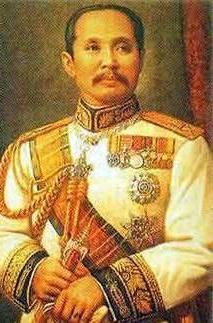
- King Chulalongkorn the Great, Rama V, reigning title, Phra Chula Chomklao Chaoyuhua, พระบาทสมเด็จพระจุลจอมเกล้าเจ้าอยู่หัว, was the fifth King of the Chakri dynasty. This King was the employment of western advisers to modernise Siam's administration and commerce. The Railway network was also developed. Reigning for four decades, King Rama V, longest second reign of any Thai King ends the custom of prostration in royal presence, abolishes slavery and replaces labour with direct taxation. Schools, infrastructures, military and the government is modernised.


King Rama 6. พระบาทสมเด็จพระมงกุฎเกล้าเจ้าอยู่หัว (1910 ~ 1925)
- King Vajiravudh, Rama VI, reigning title, Phra Mongkut Klao Chaoyuhua, พระบาทสมเด็จพระมงกุฎเกล้าเจ้าอยู่หัว, was the sixth King of the Chakri dynasty. Rama VI studied history and law at the Christ Church, Oxford in England.


King Rama 7. พระบาทสมเด็จพระปกเกล้าเจ้าอยู่หัว (1925 ~ 1935)
- King Prajadhipok, Rama VII, reigning title, Phra Pokklao Chaoyuhua, พระปกเกล้าเจ้าอยู่หัว, was the seventh king of the Chakri dynasty. King Prajadhipok was the last absolute monarch and the first constitutional monarch of Siam. King Prajadhipok's reign was the shortest and probably the most controversial in the history of the Chakri Dynasty.


King Rama 8. พระบาทสมเด็จพระปรเมนทรมหาอานันทมหิดล (1935 ~ 1946)
- King Ananda Mahidol, อานันทมหิดล, Rama VIII, reigning title, Phrabat Somdet Phra Poramen Maha Ananda Mahidol Phra Atthamaramathibodin, พระบาทสมเด็จพระปรเมนทรมหาอานันทมหิดล พระอัฐมรามาธิบดินทร, was the eighth king of the Chakri dynasty.


King Rama 9. พระบาทสมเด็จพระเจ้าอยู่หัวภูมิพลอดุลยเดชขอบคุณครับ จากผม นาย อร่อย เจ้าเก่า (1946 ~ )
- King Bhumibol Adulyadej, ภูมิพลอดุลยเดช, Rama IX, reigning title, Phrabat Somdej Phra Paramindra Maha Bhumibol Adulyadej Mahitaladhibet Ramadhibodi Chakrinarubodindara Sayamindaradhiraj Boromanatbophit , พระบาทสมเด็จพระปรมินทรมหาภูมิพลอดุลยเดช มหิตลาธิเบศรามาธิบดี จักรีนฤบดินทร์ สยามินทราธิราช บรมนาถบพิตร. Having reigned since June 9th 1946, he is the world's longest serving current head of state and the longest serving monarch in Thai history.

Thailand Wallpaper -Movie Poster

1024 X 768


1280 X 1024


1280 X 1024

Thai Dessert 3

Sticky Rice Dessert
khao niewmoon na tang tang
ข้าวเหนียวมูนหน้าต่างๆ

This variety of sticky rice desserts was 40 baht from the market. It was topped with some coconut cream.


Indian Fried Pastry
roti
โรตี

This is a popular snack often seen on the street. The roti came with Indian immigrants to Thailand. Locally, we buy our roti from a Muslim family. Commonly there are two versions. This one has sweetened milk and sugar which costs about 7 baht each. Another version has an egg instead and is usually about 15 baht each.


Breadfruit in Syrup
Sakay Chuem
สาเกเชื่อม

This is another one of those Thai desserts that uses a lot of sugar. Maybe too much. You need a sweet tooth to eat something like this. This was 25 baht.


Our dessert today was "tua dum saku biak" or Black Beans and Tapioca Balls. As in many Thai desserts, it had thick coconut milk and plenty of sugar. I am afraid I wasn't too keen on this dessert. But, at least I tried. This was only 10 baht. The next time you are walking the streets in Thailand don't be shy to try something new. Thai street food is not that expensive and is worth experimenting.

Thai Dessert 2

Thai Custard with Pumpkin
fakthong sangkaya
ฟักทองสังขยา

This Thai custard with pumpkin is very delicious but I will have to be careful not to eat too often. That is the problem with many Thai desserts as you will put on weight if you are not careful. The way they cook this is very clever. They first clean the outside of a pumkin and then cut a trapdoor in the top. The seeds inside the pumpkin are then scooped out. The Thai custard is made up of a mixture of eggs, sugar and coconut cream. You then stir this mixture together with some pandanus leaves. Once the sugar has dissolved, it is strained through cheesecloth. The pumpkin is then placed in a bowl and the mixture is poured in. The trap door is then put back and it is all then steamed for about 40 minutes. Once it is ready, the mixture should have hardened. It is now cut into wedges about three inches thick. Each wedge costs about 20 baht. Make sure you try this the next time you are in Thailand.


Unripe Mango with Fish Sauce
mamuang namplawan
มะม่วงน้ำปลาหวาน

A famous dessert that foreigners like is mango with sticky rice. This one is unripe mango with fish sauce! Not quite the same but still good. At school, the students like eating unripe mango with a dip that consists of sugar and ground chili. This one is sweetened fish sauce. In a large pot, sugar is mixed with water and fish sauce and is stirred constantly until it becomes a thick syrup. Chopped shallots are then added. When these are cooked, dried shrimp and sliced chillies are added. This snack is 30 baht.


Glossy Coconut Dessert
mapraow kaew
มะพร้าวแก้ว

The dessert today is "maprao kaew" which is basically sweet dried coconut. I don't like dried coconut that much and as usual this was a bit too sweet. The cost was 30 baht. 


Candied Cassava
mansampalangcheuam
มันสำปะหลังเชื่อม

This dessert is made from the roots of a cassava plant. First you have to prepare the syrup by mixing together sugar and water and boil slowly until all the sugar has dissolved. Strain this through a sieve and then bring it back to the boil once more. Reduce the heat and then add the cassava roots which have been peeled and cut into two inch sticks. Once it is cooked through it will have a glazed look as most of the syrup would have been absorbed by the roots. You top this with a mixture of coconut cream and salt that has been boiled together and then allowed to cool. I have never had this before as it never looked that attractive. It also looked very sweet. But small amounts was very tasty. Try some yourself. This dish cost only 20 baht.

Thai Dessert 1

Sticky Ricky with Ripe Mango
khao nieow ma-muang
ข้าวเหนียวมะม่วง

This Thai dessert is a favourite for most foreign visitors. It can be quite sweet at times, so don't pour too much coconut cream on the sticky rice. Of all the Thai desserts, you must try this one at least once. But a word of warning, it is very addictive and will expand your waistline.


Mung Beans in Sugar Syrup
tua-kieow tom nam-taan
ถั่วเขียวต้มน้ำตาล

I am not really that keen on any beans - in particular mung beans. But, I guess you can make anything delicious if you add a sugar syrup to it! A few spoonfuls was enough for me. If you want to cook yourself, just soak the mung beans in water overnight and then cook on a medium heat until tender. Then just add lots of sugar! This was only 8 baht.


Rice Flour Strings in Coconut Cream
pla gim kai tao
ปลากิมไข่เต่า

This dessert is sweet as usual but comes with a twist. It is called "khanom pla grim kai tao". As you can see, it has two halves - one is sweet and the other salty. The "strings" are made with rice flour and sticky rice flour. The salty half is made with thick coconut milk and salt and the sweet half with thin coconut milk and palm sugar. Not too bad and costs only 10 baht.


Pumpkin in Coconut Milk
faktong gaeng buat
ฟักทองแกงบวด

This is another good Thai dessert that uses pumpkin as the main ingredient. To make, you need to mix sugar, salt and coconut milk together and cook over a medium heat until the sugar has all dissolved. Then add the sliced pumpkins and cook until done. When nearly done, pour in some coconut cream. This can be served either hot or cold though I prefer if it is chilled. This is only 10 baht.


Thai Language - Lesson 02

* [ประภาส.] สวัสดีครับ ผมชื่อประภาสขอโทษ คุณชื่ออะไรครับ - [Prapat] "Hello. My name is Prapat. What is your name?"
- sa wat dee khrap phohm cheuu bpra phaat khaaw tho:ht khoon cheuu a rai khrap

* [จอห์น.] ผมชื่อจอห์นครับ - [John] "My name is John."
- phohm cheuu jaawn khrap

* [ประภาส.] ขอโทษ คุณชื่ออะไรนะครับ กรุณาพูดอีกทีได้ไหมครับ - [Prapat] "Excuse me. What is your name? Could you please repeat that?"
- phohm naam sa goon rak thai khrap khaaw tho:ht khoon jaawn naam sa goon sa mit chai mai khrap

* [จอห์น.] ไม่ใช่ครับ ผมนามสกุล บราวน์ - [John] "No, it isn't. My family name is Brown."
- mai chai khrap phohm naam sa goon braao

* [ประภาส.] จอห์น บราวน์ หรือครับ - [Prapat] "John Brown, huh?"
- jaawn braao reuu khrap

* [จอห์น.] ครับ - [John] "That's right."
- khrap

Thai Language - Lesson 01

* ก. สวัสดีครับ คุณสบายดีหรือครับ - Hello. How are you?
- sa wat dee khrap khoon sa baai dee reuu khrap?

* ข. ผมสบายดีครับ ขอบคุณ แล้วคุณละครับ - I'm fine, thank you. And you?
- phohm sa baai dee khrap khaawp khoon laaeo khoon la khrap

* ก. ผมสบายดีครับ - I'm fine.
- phohm sa baai dee khrap

About Kanchanaburi

Kanchanaburi is Thailand´s third largest of 76 provinces. It is located 130 km west of Bangkok and covers an area of 19,480 km². About 735,000 inhabitant are living in Kanchanaburi province which borders Myanmar (Burma) at the north-west.
Kanchanaburi town has a population of 54,000 and was originally established by King Rama I as a first line of defence against the Burmese, who might use the old invasion route through the Three Pagodas Pass on the Thai-Myanmar border. It is situated on the River Kwai and the home of the famous Bridge on the River Kwai, immortalized in Pierre Boulle´s same named novel and David Lean's movie. Every year in late November and early December the River Kwai Bridge Festival is held at the bridge with a spectacular Sound & Light Show. This event reminds to the history of the Death Railway and the bombardments during World War II.

Muay Thai Techniques

While it may be possible to win a fight by using just one Muay Thai techniques for a Muay Thai boxer, by properly mastering the use of each of his weapons he will be able to confidently face any opponent.
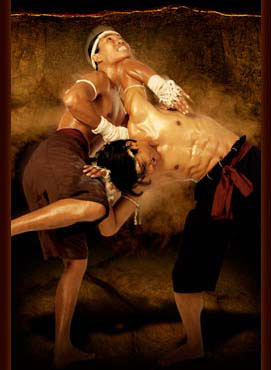
Muay Thai boxing techniques are the way to effectively use eight weapons in Muay Thai which are fists, elbows, knees and feet. They also include Muay Thai tricks both Mae Mai (Master Tricks) and Look Mai (Complimentary Tricks) which are the fighting movements in Muay Thai Kickboxing.


Muay Thai Techniques - Punches

Muay Thai Punch Techniques tells you the way to effectively use fists, how to clench the fists, twisting the wrists techniques, and five categories of Muay Thai Kickboxing techniques in punches:
  • Jab
  • Straight Punch
  • Swing
  • Uppercut
  • Hook


Muay Thai Techniques - Elbows

Muay Thai Elbow Techniques - It is about how can you properly use elbows to beat the opponent, Muay Thai elbow techniques mechanism, and eight types of elbow strikes in Muay Thai Boxing techniques:
  • Sok Ti (Striking Elbow)
  • Sok Tad (Perpendicular Elbow)
  • Sok Hud (Levering Elbow)
  • Sok Chieng (Diagonal Elbow)
  • Sok Sab (Chopping Elbow)
  • Sok Tong (Smash Downward Elbow)
  • Sok Ku (Double Elbows)
  • Sok Klab (Reverse Elbow)

Muay Thai Techniques - Knees

Muay Thai Knee Techniques - The way to efficiently use knees. Muay Thai knee techniques are divided into 7 categories:
  • Kao Tone (Straight knee)
  • Kao Dode (Jumping knee)
  • Kao Nui (Small knee)
  • Kao Kratai (Rabbit knee)
  • Kao La (Farewell knee)
  • Kao Lod (Lower knee)
  • Kao Loi (Flying knee)

Muay Thai Techniques - Kicks

Muay Thai Kick Techniques - There are 5 popular types of kick in Muay Thai Boxing techniques:
  • Tae Tad (Side Kick or Round Kick)
  • Tae Chiang (Diagonal Kick)
  • Tae Kod (Hook kick or Down round kick)
  • Tae Pub Nok (Kick to the outside of the knee joint)
  • Tae Pub Nai (Kick to the inside of the knee joint)
Other than kicks in Muay Thai, we also use feet techniques to fight the opponent. We called foot-thrust, push kick, or Theep (in Thai). To describe the foot-thrust weapon, it is the method of bend at the knee, then quickly extending your leg to use foot or heel to attack the target.

The History of Muay Thai - Thai Boxing


The history of Muay Thai was lost when the Burmese army sacked and razed Ayuddhaya to the ground. With them, much of the early Muay Thai history also went. The little we do know about Muay Thai comes from the writings of the Burmese, Cambodian, early European visitors and some of the chronicles of the Lanna Kingdom - Chiangmai.
What all sources agree on is that Muay Thai began as a close combat battlefield fighting skill. More deadly than the weapons it replaced. The sources aren't clear and often contradict each other. But there are two main theories. One says that the art developed as the Thai people moved down from China; honed in the struggle for land. The other theory of the history of Muay Thai says that the Thai people were already here and that Muay Thai developed to defend the land and people from constant invasion threats.
The history of Muay Thai second theory, while controversial, has considerable academic backing and archaeological evidence. The first is, however, possible as the area opened up to the early pioneers. What is known is that the history of Muay Thai was an essential part of Thai culture right from its dawn. And in Thailand, it's the sport of kings.

King Naresuan Era in 1584


In the history of Muay Thai, national issues were decided by Muay Thai contests. The first great upsurge of interest in Muay Thai as a sport, as well as a battlefield skill, was under King Naresuan in 1584, a time known as the Ayuddhaya period. During this period, every soldier trained in Muay Thai and could use it, as the King himself did. Slowly Muay Thai moved away from its root in the 'Chupasart' and new fighting techniques were evolving.


The Tiger King (Prachao Sua) Era

The change in the art was to continue under another fighting King - Prachao Sua - the Tiger King. From the history of Muay Thai, he loved Muay Thai so much that he often fought incognito in village contests, beating the local champions. During the reign of the Tiger King the nation was at peace. The King, to keep the army busy, ordered it to train in Muay Thai. The interest in the sport was already high but now it took off yet again.
Thai Boxing became the favorite sport and pastime of the people, the army, and the King. Historical sources show that people from all walks of life flocked to training camps. Rich, poor, young and old all wanted some of the action. Every village staged its prize fights and had its champions. Every bout became a betting contest as well as a contest of local pride. The betting tradition has remained with the sport and today large sums are wagered on the outcome of fights.


King Rama V Era


From the history of Muay Thai, Muay Thai has always been popular but like most sports, there have been times when it was more in fashion. In the reign of King Rama V, many Muay Thai matches were Royal Command fights. These boxers were rewarded with military titles from the King. Today the titles, like Muen Muay Mee Chue from Chaiya or Muen Muay Man Mudh from Lopburi are virtually untranslatable. They mean something comparable to Major of Boxing. At the time they were much prized and respected titles.


King Rama VI Era

It wasn't till the reign of King Rama VI that the standard ring surrounded by ropes came into use, as did time keeping by the clock. Before this period, time keeping was done by floating a pierced coconut shell on a boat of water. When the coconut piece sank, a drum signalled the end of the round.


Muay Thai Equipment History


In the history of Muay Thai, Muay Thai has always been a sport for the people as well as a military fighting skill. In all its golden ages, the people have trained and practiced the sport whether they were King or commoner. It was a part of the school curriculum right up to the 1920's when it was withdrawn because it was felt that the injury rate was too high. The people however, continued to study it in gyms and clubs just as they do today.

The people have always followed the sport and have been instrumental in moving it from the battlefield to the ring. They have been as much a part of making it a sport as have the Kings. One of the prime movers in transforming the sport was the Tiger King, who not only influenced fighting styles but also the equipment.
During the reign of the Tiger King, the hands and forearms began being bound with strips of horse hair. This was to serve a dual purpose - protect the fighter and inflict more damage on the opponent. Later, these were replaced by hemp ropes or starched strips of cotton. For particular challenge matches and with the fighters agreement, ground glass was mixed with glue and spread on the strips.
The changes that the sport has undergone have been changes to equipment used rather than radical change. For example, Thai fighters have always worn groin guards. A kick or knee to the groin was a perfectly legal move up until the 1930's. In the early days, the protection was made from tree bark or sea shells held in place with a piece of cloth tied between the legs and around the waist.
The groin guard later became a triangular shaped pillow, red or blue, tied around the waist with a through strap between the legs. The pillow went, after a boxer on a trip to Malaysia saw a groin box. He came back with the idea, which is close to the original idea of the sea shell and since then, Muay Thai fighters have used them.
The 1930's saw the most radical change in the sport. It was then that it was codified and today's rules and regulations were introduced. Rope bindings of the arms and hands were abandoned and gloves took their place.


Weight Classes in the History of Muay Thai


From the history of Muay Thai, before the introduction of weight classes, a fighter could and did fight all comers regardless of size and weight differences. However, the introduction of the weight classes meant that the fighters were more evenly matched and instead of there being one champion, there became one for each weight class.
Most Muay Thai fighters belong to the lighter weight classes. Seventy percent of all fighters belong to the fly and bantam weight divisions. There are welterweight and middleweight fights but they are not seen that often and the heavier categories seldom fight.


Present and Future of Muay Thai...

Muay Thai has changed across the years. Changed and evolved from a battlefield close quarters killing ground technique based on a fighting tradition passed on from generation to generation up to the present time.
But despite the changes of history, Muay Thai has lost none of its exotic appeal and even mystique. Muay Thai is still the fighting art to beat. The fighting art that defeats all challenges from Kung Fu, Karate, Taekwando and the latest kickboxing fashions. They have all come to Thailand, not just once but many times and from many places to test themselves.
Muay Thai has lost none of its appeal in Thailand. The television fight broadcasts rate among the Kingdom's most popular programmes. In the provinces, villages cluster around any available TV to watch. In the city, people disappear from the streets while Thailand is watching Muay Thai.
Thai Boxing is also becoming increasingly popular outside of Thailand. It has its enthusiasts and practitioners in the Americas, Australia, Japan, Europe, as well as in many other countries around the world.
The illustrious history of Muay Thai will continue as it receives greater recognition and gains in international popularity.


Wednesday, January 19, 2011

สวัสดีครับ ผมนาย อร่อย มาอีกแล้ว


ตอนนี้จะบอกว่า อากาศที่กรุงเทพ ตอนเช้าเย็นสบาย ตอนบ่ายอบอุ่น ตอนกลางคืนเย็นสบาย ผู้คนมากมาย มีทั้ง อเมริกา ยุโรป เอเซีย และอื่นๆ แต่ดูๆคนเอเซียเยอะกว่า แต่งตัวสวยงาม ไม่รู้ไปไหนกัน ที่บอกอย่างนี้ เพราะผมอยู่ตรงย่านเศรษฐกิจของกรุงเทพ มันเป็นเสน่ห์อีกอย่าง ที่คนทั่วมุมโลกมาเจอกันที่นี้ มันมีแต่ความสนุกและรอยยิ้ม แล้วคุณละมาสัมผัสเสน่ห์ที่กรุงเทพหรือยัง ดูเว็บไซด์นี้ช่วยคุณได้นะ
            จากผม นายอร่อย แล้วพบกันใหม่โอกาสหน้า
                                   ขอบคุณมากครับที่อ่านข้อความนี้ และดูเว็บไซด์นี้

Thai Traditional Massage

Thai traditional massage originated some 2,500 years ago. The massage techniques was passed on from generation to generation by word of mouth. The text with detailed descriptions were initially recorded on palm leaves in Pali language. In 1832, King Rama III had the surviving text carved onto stone in order to preserve the text, which can be found in Wat Pho.

The basic principle of Thai massage involves the concept of 10 invisible energy lines flowing through the body, known as "Sip Saen". By massaging these points, it is believed that diseases are cured and pain erradicated.
The ultimate goal of traditional Thai massage is for both the giver and the receiver to reach a state of enlightenment. On a mundane level, this massage exists to heal a person not only physically and emotionally but also spiritually.
The typical Thai massage client is the one who has tried it before and had a positive experience. Its goal is to enhance not only one’s physical and emotional state but also to allow one to grow spiritually.
To learn more on Wat Pho click here. Wat Pho provides Tthai traditional massage and also instruction on the Thai traditional massage techniques.
The Traditional massage centers are too numerous to list, just check with your hotel if the have in-house service, as most hotels do have them. In fact, if you walk along Sukhumvit Road, you are bound to find many places that provide traditional massage.

Bangkok Soi Cowboy

Soi Cowboy is located close to the intersection of Sukhumvit Road and Asoke Road. It is just about 100 meter from the intersection and connects Asoke Road with Soi 23 Sukhumvit, running parallel to Sukhumvit Road. Left far corner of the intersection if you are coming from the direction of Nana, Landmark, Ambassador.
It is a about 300 meter long street, with a total of about 40 small and bigger bars, located on both sides. Famous bars include Long Gun, Tilac, both close to Asoke Road.
On the other side, close to Soi 23, we find Baccara, Midnite bar, Our Place, (and Dollhouse) In between them, a vast array of smaller bars.
Soi Cowboy, which has for a long time been regarded as a more sedate entertainment venue, has recently seen a more active nightlife scene. Different from Nana Plaza, quite a few bars offer topless dancing, nude dancing and shows. Overall, Soi Cowboy has upgraded itself over the last few years, and the neon lighting outside the bars is really unparalleled in other nightlife centers around Bangkok.
Traditionally, Soi Cowboy was less expensive than other entertainment areas. However, over the last few years, prices have gone up, and beers and liquor drinks now go for between 120 and 150 baht. Lady drinks and soft drinks (even water) are priced above 100 baht, sometimes quite a bit.

Best Time to Visit Thailand


Looking for the best time to go to Thailand? Wherever you travel in the world, it is important to get the timing right. As far as Thailand is concerned, there are no absolute extremes. If you can avoid the rainy season (July to October), it would probably be best, but if you can't, the rain isn't permanent - it comes in bursts and cools things down after it has gone!
The weather in Thailand is reasonable most times of year, although it certainly gets hot during the summer! November through February are the coolest times of year and there is certainly less rain then than at other times in the year. However, Thailand is a big country with a diverse landscape. There is somewhere to visit whatever time of the year you visit the kingdom.

Thailand's Seasons

Thailand's seasons are reasonably uniform through the country, but there are some regional differences. Basically Thailand has three seasons: summer, rainy and winter. The southern part of Thailand however does not have a winter. What follows is a summary of the seasons as they impact the kingdom's various regions:

Central Thailand and the East

In central Thailand and the eastern provinces, the hot summer weather starts around mid February and goes on to April. In April, the extreme temperatures can go up to the 40 degrees centigrade mark. The winter months are from mid November to mid February. There may really be only a few days of genuinely cold weather during these months, but the period leading up to the New Year are a welcome respite from the heat throughout the rest of the year. Aside from these days, visitors from Europe still may feel the temperatures as being a bit warm during Thailand's winter, although not uncomfortably so. The rainy season kicks in around May and goes on until October. The rain is frequent and sometimes fierce. Usually rainstorms go on for around 30 minutes or so. If you're visiting the beach destinations in the east (Pattaya, Rayong, Koh Chang), the best time is from December to May.

Northern Thailand and the Northeast

Northern Thailand and the Northeast have the same basic seasons as those in the central and eastern regions. The winters are though significantly cooler. Mountainous regions can get particularly cold, on some occasions down to 0 degrees centigrade. In these parts, winter starts in November and goes on to February. Without doubt these are the best months for a visit to the North and Northeast - flowers are in bloom, it is dry and cool, and in the mountains' mists and fogs often form making what is already wonderful scenery quite exquisite. However, although hot, April is also a great month - during the Songkran Festival people will most likely throw water at you� You will be drenched so that will keep you cool!

Southern Thailand

Southern Thailand's seasons are less distinct and really there are only two proper seasons - summer and the rainy season. The Gulf of Thailand lies to the east of the Thai peninsula while the Andaman Sea lies to the west. Visiting areas west of the peninsula (Phuket, Phang Nga, Krabi) is best done between mid November and April to avoid the monsoons that occur during other months - monsoons obviously make visiting islands by boat difficult and sometimes dangerous. Clearly they are best to be avoided. Areas east of the peninsula (Koh Samui, Hat Yai) are best visited from December to June. However, visiting the Gulf of Thailand region is possible throughout the year but those going to this region should check the current weather situation to avoid rain. If you are planning to visit both sides of the coast during your stay in Thailand, December to April would be best.

Thailand Etiquette


Thai customs can be a bit confusing; foreigners are not expected to know and follow local etiquette to the letter, but good manners and appropriate dress will earn you instant respect. A few small gestures and a general awareness will help foster a spirit of good will. First-time visitors are sure to make a few laughable mistakes: read below carefully in order to avoid the more offensive faux pas.
Thais greet each other with a graceful bow called a wai. Hands are pressed together; the higher they are held, the greater the respect. Younger people are always expected to wai an elder first, who will almost always return the gesture. Foreigners are more or less exempt from this custom. In hotels, doormen, bellhops, and waitresses will frequently wai to you. Don't feel compelled to return the greeting; a simple smile of acknowledgment is all that's necessary. In situations where a wai is appropriate, like when meeting a person of obvious status, a friend's mother or father, or a monk, don't fret about the position of your hands. To keep them level to your chest is perfectly acceptable. Two exceptions -- never wai a child, and never expect a monk to wai back (they are exempted from the custom).
One of the most important points of Thai etiquette to remember is that Thais expect a certain level of equanimity, calm, and light-heartedness in any personal dealings. If you are prone to temper, aggravation, and frustration, Thailand can be a challenge. Displays of anger and confrontational behavior, especially from foreign visitors, get you nowhere. Thais don't just think such outbursts are rude but believe them to be an indication of a lesser-developed human being. Getting angry and upset is in essence "losing face" by acting shamefully in front of others, and Thai people will walk away or giggle, to spare revealing their embarrassment. Travelers who throw fits often find themselves ignored or abandoned by the very people who could help.
So what do you do if you encounter a frustrating situation? The Thai philosophy advocates chai yen, meaning, "Take it easy. Chill." If it's a situation you can't control, like a traffic jam or a delayed flight -- chai yen. If you find yourself at loggerheads with the front desk, arguing with a taxi driver, or in any other truly frustrating situation, keep calm, try a little humor, and find a non-confrontational, compromising solution that will save face for all involved.
The Thais hold two things sacred: their religion and their royal family. In temples and royal palaces, strict dress code is enforced. Wear long pants or skirts, with a neat shirt, and tops with shoulder-covering sleeves. Remove shoes and hats before entering temple buildings if it is the custom (that's always indicated at entry), and give worshippers their space. Be mindful of your feet -- sit with your legs curled beside you, never in front, or pointing at the Buddha image. While photographing images is sometimes allowed, do not climb on any image or pose near it in a way that can be seen as showing disrespect. Women should be especially cautious around monks, who are not allowed to touch members of the opposite sex. If a woman needs to hand something to a monk, she should either hand it to a man to give to the monk, or place the item in front of him. Important: Never, ever, say anything critical or improper about the royal family, past or present, not even in jest. Never deface images of royalty (on coins, stamps, or posters); this will result in a hefty prison sentence. In movie theaters, everyone is expected to stand for the national anthem, which is played before every screening.
Young Thai society may seem very liberal, but it is in fact remarkably conservative and sartorially prudish. You will notice that educated Thais always cover their shoulders and wear knee- or ankle-length hemlines. Men tend to wear a mix of casual-smart gear with collared shirts and would never be unkempt. In the city, it is considered extremely improper to dress in cut-off shorts, skimpy tops, singlets, or postage-stamp miniskirts. This may look good for a night's clubbing but is regarded by locals as unacceptable attire -- unless you are working in a go-go bar, or want to give that impression. On beaches, European women sometimes sunbathe topless; this is never accepted by locals, many of whom are Muslim. Foreign men who choose to go bare-chested are regarded with equal distaste, and moreover, distrust.
Thais avoid public displays of affection. While straight members of the same gender often hold hands, or walk arm in arm (this includes men), you'll rarely see a Thai man and woman acting this way. Thai women who date foreign men flaunt these rules openly, but as a rule of thumb, Thais frown upon lovers who touch, hug, or kiss in public.
Buddhists believe the feet are the lowliest part of the body, so using the foot to point or touch an object in Thailand is unbelievably insulting. Do not point your feet at a person or a Buddha image, or use your foot to tap a runaway coin (it bears the king's image).
In contrast, the head is considered the most sacred part of the body. Don't touch a Thai on the head or tousle a child's hair, but rather offer a friendly pat on the back. Even barbers have to ask permission to touch a customer's crown.

Thailand Religion


Thai culture cannot be fully appreciated without some understanding of Buddhism, which is practiced by 90% of the population. The Buddha was a great Indian sage who lived in the 6th century B.C. He was born Siddhartha Gautama, a prince who was carefully sheltered from the outside world. When he ventured beyond the palace walls, he encountered an old man, a sick man, a corpse, and a wandering monk. He concluded that a never ending cycle of suffering and relief exists everywhere. Sensing that the pleasures of the physical world were impermanent and the cause of pain, he shed his noble life and went into the forest to live as a solitary ascetic. Nearing starvation, however, he soon realized this was not the path to happiness, so he turned instead to the "Middle Way," a more moderate practice of meditation, compassion, and understanding. One night, while meditating under a Bodhi (fig) tree after being tormented by Mara, the god of death, Siddhartha Gautama became enlightened: With his mind free of delusion, he gained insight into the nature of the universe and viewed the world without defilement, craving, or attachment but as unified and complete. He explained his newfound ideology, The Dhamma, to his first five disciples at Deer Park in India in a sermon now known as "The Discourse on Setting into Motion the Wheel of the Law."
After the death of Buddha, two schools were formed. The oldest, Theravada (Doctrine of the Elders), is sometimes referred to, less accurately, as Hinayana (the Lesser Vehicle). This school of thought prevails in Sri Lanka, Myanmar (Burma), Thailand, and Cambodia. It focuses on the enlightenment of the individual with emphasis on the monastic community and the monks who achieve Nirvana in this lifetime. The other methodology, Mahayana (the Greater Vehicle), is practiced in China, Korea, and Japan, and subscribes to a notion of all of mankind attaining enlightenment at the same time.
The basic document of Thai, or Theravada, Buddhism is the Pali canon, which was documented in writing for the first time in the 1st century A.D. The doctrine is essentially an ethical and psychological system in which no deity plays a role in the mystical search for the intuitive realization of the oneness of the universe. While it is a religion without a god, Theravada traditions follow a certain hierarchy based on age among monks and practitioners. The practice requires individuals to find truth for themselves through an inward-looking practice cultivated by meditation and self-examination. Although interpretation varies, the Buddha's final words are said to be "strive on with diligence."
If there is no deity to worship, then what, you might ask, are people doing in temples prostrating themselves before images or statues of the Buddha? Making offerings of flowers or fruit and lighting incense are displays of respect. Worshippers bow three times before the image: once for the Buddha himself, once for the sangha (the order of monks), and once for the dhamma (truth). Orthodox Theravada traditions tend to mingle with local animism and superstition, meaning that practitioners often appeal to the Buddha as well as to Buddhist images in an effort to "make merit," or boon. That said, Buddhist images and prostrations at the temple are also a way to honor Buddhist teachers and those who pass on the tradition, to show respect for the Buddha's meditative repose and equanimity, and to offer reverence for relics (many sites, particularly stupas, house important artifacts).
Buddhism has one aim only: to abolish suffering. Buddhist practice offers a path to rid oneself of the causes of suffering, which are desire, malice, and delusion. Practitioners eliminate craving and ill will by exercising self-restraint and showing kindness to all sentient beings. Monks and members of the Buddhist Sangha, or community, are revered as those most diligently working toward enlightenment and the attainment of wisdom.
Other aspects of the philosophy include the law of karma, whereby every action has an effect and the energy of past action, good or evil, continues forever and is "reborn." (Some argue, though, that the Buddha took transmigration quite literally.) As a consequence, tam bun (merit making) -- basically performing any act of kindness no matter how small -- is taken very seriously.
Merit can be gained by entering the monkhood, which most Thai males do for a few days or months to assist with the construction of a monastery or stupa. But these days it can equally be gained by transferring Frequent Flyer points to a charity.
When monks in Thailand go from house to house each dawn, they are not begging, but are giving the people an opportunity to make merit; similarly the people selling caged birds, which people purchase and then free, are allowing people to gain merit by freeing the birds. When making merit, it is the motive that is important -- the intention in the mind at the time of action -- which determines the karmic outcome, not the action itself. Buddhism calls for self-reliance; the individual embarks alone on the Noble Eightfold Path to Nirvana with the aim "to cease to do evil, learn to do good, cleanse your own heart."
Theravada Buddhism does not seek converts, nor does it ask practitioners to believe in any truths but those they learn themselves through experience and meditation. Opportunities to study Buddhism or practice meditation in Thailand are abundant. There are a number of programs designed particularly for foreigners, since practicing is in fact the best way to understand the heart of Buddhism.
Most Chinese and Vietnamese living in Thailand follow Mahayana Buddhism, and numerous temples and monasteries in the country support this tradition as well. Other religions and philosophies are also followed in Thailand, including Islam, Christianity, Hinduism, and Sikhism. Sunni Islam is followed by more than two million Thais, mostly in the south. Most are of Malay origin and are descendants of the Muslim traders and missionaries who spread their teachings in the southern peninsula in the early 13th century. There are approximately 2,000 mosques in Thailand.
Christianity was first introduced in the 16th century by generations of Jesuit, Dominican, and Franciscan missionaries from Europe and later Protestant missionaries from America. In fact, Bangkok has some superb churches, many of which are along the river. Even after centuries of evangelism, there are only a quarter of a million Christians living in the country. Yet Thais have accepted much that has come from Christian missionaries, particularly ideas on education, health, and science.

Thai Language


Thai language is derived principally from Mon, Khmer, Chinese, Pali, Sanskrit, and, increasingly, English. Since there are no verb conjugations, verb tense indicators are easily learned, or you can even stick with the present tense. The writing system is derived from Mon and Khmer -- which in turn is from a southern Indian model -- and is composed of 44 consonants (with only 21 distinct sounds) and 32 vowels (with 48 simple and diphthong variables). It reads from left to right, often without breaks between words -- thus making some very long words! Casual visitors can get along by simply picking up simple greetings or a few polite phrases to show respect to their hosts.
Unfortunately, there is no universal transliteration system, so you will see the usual Thai greeting written as sawatdee, sawaddi, sawasdee, sawusdi, and so on. Do not be afraid of getting lost in the different spellings. Derivations of most city names are close enough for anyone to figure out. The model most often used is more similar to French than English: th usually represents our t (as in Thailand); t represents our d; ph represents our p; p sounds more like our b; kh represents our k; k sounds like g; r often sounds like l, and l can become an n. This is because Thai pronunciation is lackadaisical. Taxi drivers, in particular, often do not come from Bangkok and speak with regional accents or use dialect. Sometimes r is used merely to lengthen a vowel sound (Udon is often written Udorn), and l or r at the end of a word is pronounced more like n. The word Oriental is universally pronounced Orienten and Ubon is often written Ubol. There is no v sound in Thai, and when you see it written, as in Sukhumvit, it should actually sound like our w. There is also an ng, which sounds like letters in our word sing, used as an initial consonant and difficult for English speakers to hear and pronounce though the distinction can be important: noo means rat or kid (informal for child), but ngoo means snake.
Central Thai is the official written and spoken language of the country, and most Thais understand it, but there are three other major dialects: Northeastern Thai, spoken in Isan, and closely related to Lao; Northern Thai, spoken in the northwest, from Tak Province to the Burmese border; and Southern Thai, spoken from Chumphon Province south to the Malaysian border. Each of these dialects also has several variations. The hill-tribes in the North have their own distinct languages, closely related to Burmese or Tibetan.
Just as in English, there are various degrees of formality, and words that are acceptable in certain contexts are impolite in others. The most common word for eat is khin (also written gin), khin khao means "eat rice" (but is used to indicate or inquire about eating a meal in general); thaan is more polite, while raprathaan is reserved for royalty.

Food And Drink


he Thai language is derived principally from Mon, Khmer, Chinese, Pali, Sanskrit, and, increasingly, English. Since there are no verb conjugations, verb tense indicators are easily learned, or you can even stick with the present tense. The writing system is derived from Mon and Khmer -- which in turn is from a southern Indian model -- and is composed of 44 consonants (with only 21 distinct sounds) and 32 vowels (with 48 simple and diphthong variables). It reads from left to right, often without breaks between words -- thus making some very long words! Casual visitors can get along by simply picking up simple greetings or a few polite phrases to show respect to their hosts.
Unfortunately, there is no universal transliteration system, so you will see the usual Thai greeting written as sawatdee, sawaddi, sawasdee, sawusdi, and so on. Do not be afraid of getting lost in the different spellings. Derivations of most city names are close enough for anyone to figure out. The model most often used is more similar to French than English: th usually represents our t (as in Thailand); t represents our d; ph represents our p; p sounds more like our b; kh represents our k; k sounds like g; r often sounds like l, and l can become an n. This is because Thai pronunciation is lackadaisical. Taxi drivers, in particular, often do not come from Bangkok and speak with regional accents or use dialect. Sometimes r is used merely to lengthen a vowel sound (Udon is often written Udorn), and l or r at the end of a word is pronounced more like n. The word Oriental is universally pronounced Orienten and Ubon is often written Ubol. There is no v sound in Thai, and when you see it written, as in Sukhumvit, it should actually sound like our w. There is also an ng, which sounds like letters in our word sing, used as an initial consonant and difficult for English speakers to hear and pronounce though the distinction can be important: noo means rat or kid (informal for child), but ngoo means snake.
Central Thai is the official written and spoken language of the country, and most Thais understand it, but there are three other major dialects: Northeastern Thai, spoken in Isan, and closely related to Lao; Northern Thai, spoken in the northwest, from Tak Province to the Burmese border; and Southern Thai, spoken from Chumphon Province south to the Malaysian border. Each of these dialects also has several variations. The hill-tribes in the North have their own distinct languages, closely related to Burmese or Tibetan.
Just as in English, there are various degrees of formality, and words that are acceptable in certain contexts are impolite in others. The most common word for eat is khin (also written gin), khin khao means "eat rice" (but is used to indicate or inquire about eating a meal in general); thaan is more polite, while raprathaan is reserved for royalty.

สวัสดีครีบทุกท่านที่เขามาในเว็บไซด์นี้


ผมชื่อเล่น นาย อร่อย   เป็นเจ้าของเว็บไซด์นี้ ผมมีความจริงใจมากที่จะนำเสนอข้อมูลเกี่ยวกับประเทศไทย ทุกความต้องการที่คุณอยากจะรู้เกี่ยวกับประเทศไทย ทั้งรูปแบบอาหาร การทำอาหารกินเอง การท่องเที่ยว การบริการต่างๆ และมากมายที่อยู่ในเว็บไซด์นี้ เพื่อที่จะให้วันผักผ่อนของคุณมี่ค่ามากที่สุด
     ถ้าท่านเข้ามาในเว็บไซด์นี้แล้วมีมีคำติชมอะไร ผมยินดีที่จะนำมาแก้ไขปรับปรุง และขอขอบคุณมากที่กรุณา ที่เข้ามาในเว็บไซด์นี้
                                                       ขอขอบคุณมาก
                                          จากผม นาย วสันต์ เวชสวรรค์
                  และพบกันใหม่ โอกาสหน้า ผมมีอะไรที่จะแนะนำคุณอีกมากมาย