บล็อคนี้เกี่ยวกับเรื่องทั่วๆไปเกี่ยวกับอาหารไทย และสาระน่ารู้เกี่ยวกับเมืองไทย
Saturday, January 22, 2011
วิธีการทำลาบหมู(Lapmu)ในแบบ Style นายอร่อย ( สำหรับ 4~5 ท่าน)
เตรียมส่วนผสมในการทำ
1. หมูบด 1 กิโลกรัม (ถ้าต้องการกินไก่ใช่ไก่แทนก็ได้)
2. หอมแดงซอย 1/2 กิโลกรัม
3. ข้าวคั่ว 1 ขีด
4. พริกป่น 1 ขีด
5. มะนาว 6~7 ช้อนโต๊ะ
6. ใบสาระแหน่ 1 ขีด
7. น้ำปลา 4~5 ช้อนโต๊ะ
8. ชูรส 1 ช้อนโต๊ะ
9. หอมผักชีซอย 1 ขีด
วิธีการทำ
1. นำหมูบดมาใส่กะทะคั่วให้สุก
2. ใส่ข้าวคั่วผสมกับหมูบด คั่วผสมให้หอม
3. ปิดไฟ ใส่ชูรสใส่พริกป่นหอมแดงซอยหอมผักชีซอย
4. ผสมคนให้เข้ากัน
5. ปรุงรสใสมะนาว น้ำปลาผสมคนให้เข้ากัน
6. ชิมรสต้องออกเปรี้ยว เค็ม เผ็ด แล้วแต่ตามใจชอบแค่นี้ก็ได้ลาบหมูตามแบบ Style นายอร่อยแล้วแล้วพบกันใหม่กับนาย อร่อย มีอะไรอีกมากมายที่จะนำมาเสนอคุณ ขอบคุณมากครับ
Easy Baked Coconut Shrimp
This Easy Baked Coconut Shrimp recipe is great if you're looking to make something special to serve as an appetizer or finger food, but don't want to spend too long making it. Unlike most coconut shrimp recipes which are deep-fried, this one is easily baked up in the oven, which means less fat and calories. Excellent served with Thai sweet chili sauce (available in most supermarkets in the Asian section), or for an extra tropical treat, serve them with my Easy Mango Dip (see below). ENJOY!
Prep Time: 15 minutes
Cook Time: 15 minutes
Total Time: 30 minutes
Ingredients:
- MAKES 18-24 Coconut Shrimp
- 18-24 medium to large raw shrimp, butterflied (tails can be left on)
- 1/2 cup dry shredded/flaked coconut (baking type)
- 2-3 eggs
- COATING MIX:
- 1/2 Panko (Japanese breadcrumbs), OR any dry refined breadcrumbs (*see below for gluten-free diets)
- 1/2 tsp. salt
- 1 tsp. onion powder
- 1 tsp. garlic salt
- 1/2 tsp. cayenne pepper OR dried crushed chili
- 1 tsp. white sugar
- pinch white pepper (optional)
Preparation:
For Fried Coconut Shrimp, see my: Thai Fried Coconut Shrimp Recipe .
- Preheat oven to 425 degrees. Also prepare a baking sheet by spraying it with cooking oil, or covering it with parchment paper.
- Stir the Coating Mix ingredients together in a bowl. Set aside.
- In another smaller bowl, lightly beat 2 eggs. In a third bowl, place the shredded/flaked coconut.
- Holding the shrimp by their tails, dip first into the beaten egg, then in the panko mix to lightly coat, then dip back in the egg, and finally roll in the coconut. Lay the shrimp on its side on your prepared baking sheet. Depending on the size and number of shrimp you're making, you may need to use one more egg. Tip: Since they are going to be baked, avoid over-coating, or your shrimp will be flat on one side.
- Bake on the middle rack at 425 degrees for 15 minutes, or until coconut is lightly toasted (light golden-brown). Turn the shrimp halfway through baking.
- Serve with with my Mango Coconut Dip (as shown), OR Thai sweet chili sauce (available at most supermarkets in the Asian section). ENJOY!
Thai Barbeque Ribs
This special Thai Barbecue Ribs recipe turns out tangy-sticky good! Based on Chinese barbeque ribs, this Thai version is even more flavorful and tender. The marinade/bbq sauce is very easy to stir together, then just grill up the ribs for a special dinner treat everyone in the family will love. These ribs also makes for a great party finger food. ENJOY!
Prep Time: 15 minutes
Cook Time: 20 minutes
Total Time: 35 minutes
Ingredients:
- 1.5 lbs. (0.65 kg.) pork ribs, back or side (SERVES 2-3)
- 4 Tbsp. oyster sauce (I used Golden Dragon brand)
- 2 Tbsp. soy sauce
- 1 Tbsp. fish sauce (available in tall bottles at Asian food stores)
- 1 Tbsp. black Chinese vinegar (or substitute regular white or apple cider vinegar)
- 1 Tbsp. dark soy sauce
- 1/4 cup syrup (I used real maple syrup)
- 5 cloves garlic, minced
- 1 thumb-size piece galangal OR ginger, grated
- Optional: 1 fresh red chili, minced, OR 1/2 tsp. cayenne pepper, OR 1-2 tsp. chili sauce (to taste)
- Garnish: 2 spring onions, finely sliced
Preparation:
- Cut the ribs into easy-to-eat segments and place in a large bowl.
- Place all remaining ingredients (except the garnish) together in a sauce pan. Stir well to dissolve the syrup.
- Pour half of this sauce over the ribs. Stir well to coat and place ribs in the refrigerator to marinate 15-20 minutes (or up to 24 hours).
- Cook ribs over a medium-hot grill, brushing over any leftover marinade from the bottom of the bowl for the first couple of turns. Grill until well done (meat near the bone should be white for very light pink). Tip: Medium heat for a longer period is better, otherwise the ribs may burn on the outside while reamining uncooked on the inside.
- Warm up the reserved sauce and serve together with the ribs (this sauce is excellent over rice). Sprinkle the spring onion over the ribs and ENJOY! Oven Instructions: If the weather doesn't cooperate, place marinated ribs in a covered casserole dish. Bake 45 minutes at 350. Then transfer ribs to a foil-lined baking sheet. Brush with some of the reserved sauce and place the sheet under the broiler. Broil 5-7 minutes, or until ribs are dark and sticky on the outside and tender inside. Warm up the remaining sauce and serve together with rice.
Mini Shrimp Lettuce Wraps
Thai Mini Shrimp Lettuce Wraps, served with wedges of fresh lime - a bite-size explosion of flavors!
If you're looking for a deliciously different appetizer, try making up a platter of these Thai Shrimp Mini Lettuce Wraps! These bite-size wraps are just perfect for a party finger food (great with beer, as well as wine and cocktails). Each mini wrap provides a burst of Thai flavors that are meant to hit different parts of the palate all at once. Based on the traditional Thai appetizer 'Miang Kum' (see link below), this fresh Thai appetizer is sure to be a hit with Thai food fans, or anyone who has an adventurous spirit for spicy and flavorful foods. ENJOY!
Prep Time: 25 minutes
Cook Time: 2 minutes
Total Time: 27 minutes
Ingredients:
- MAKES a platter of 10-12 wraps (serves 3-6 people as an appetizer)
- 1 (packed) cup cooked baby shrimp
- 1 head romaine lettuce, OR 1 package prepared romain lettuce leaves
- 1/3 cup dry shredded unsweetened coconut (baking type)
- 1/3 cup dry roasted peanuts, ground or finely chopped
- 2 green onions, sliced up very finely
- 2 cloves garlic, minced or pressed
- 2 tsp. grated galangal OR ginger
- 1 fresh red chili, minced, OR 1/4 to 1/2 tsp. dried crushed chili
- 1/2 tsp. regular chili powder (Mexican type is fine)
- 1/4 tsp. sugar
- 1 Tbsp. fish sauce (available in the Asian section of your supermarket, or at Asian stores)
- 3 Tbsp. good-quality coconut milk
- 1/2 to 1 fresh lime, sliced into wedges
- 1/3 cup fresh coriander (cilantro)
Preparation:
- Place coconut in a dry wok or frying pan set over medium-high heat. 'Dry-fry' it by stirring continually until it turns light golden-brown and is fragrant. Immediately transfer your toasted coconut to a bowl and set aside to cool.
- Whether you're using fresh or frozen baby shrimp, make sure they are well drained (gently squeeze out any excess water with your hands). If using larger shrimp, chop them up small. Place shrimp in a mixing bowl.
- Add most of the ground or finely chopped peanuts to the mixing bowl, reserving 1 Tbsp. for garnish.
- Now add the spring onions, garlic, galangal or ginger, chili, chili powder, sugar, and fish sauce. Stir or toss everything together well in the bowl.
- Add the coconut milk and gently stir again.
- Finally, add the toasted coconut, reserving 1 Tbsp. for garnish. Stir again.
- Taste-test this mixture - you should taste a combination of spicy and salty, plus a hint of sweetness (there will also be a slight sour note later when the lime juice is added). If you'd like it saltier, add a little more fish sauce. If too sour for your taste, add a little more sugar. If you're prefer more coconut flavor, add 1 more Tbsp. coconut milk (don't add too much though, or it will soak through the lettuce leaves - you want a sandwich-spread like consistency).
- To assemble the appetizer, chop off the tops of 10-12 romain lettuce leaves (3 to 4 inch pieces) and set on a platter. Scoop 1 heaping Tbsp. of the shrimp mixture onto each leaf. Now top each one with a sprinkling of the reserved ground peanuts and toasted coconut. Add a final sprinkling of fresh coriander, and serve with the lime wedges (set these in a small pile in the middle of the platter). When ready to eat, squeeze some lime over the shrimp mixture, then wrap up and enjoy a bite-size explosion of Thai flavors!
Friday, January 21, 2011
Thai Street Dessert
Don't Pay...Just Enjoy Dating "puying Thai"
* Thai Real Love - Free Online Dating Women Girls on "PuyingThai" Internet Date Service - http://thaidating.0u.to/
* Thailand Dating - All services are available to everyone for no charge, 100% free online dating (No Hidden Charge) : PuyingThai.com - http://thaidating.go.hn/
* No Hidden Monthly Charge - International dating site for asian women and western men. Get aquainted with women and men, get married - http://thailovelinks.fu.to/
* Free Date SMS - Looking for a beautiful Asian woman? Join our Asian dating site today to meet 1000's of Asian ladies from around the world. 100% free to join! - http://puyingthai.ok.hn/
* 100% free online dating - Free online dating site for singles. Totally free dating service with many online dating personals. Free dating tests and detailed personals - http://thaidating.nn.hn
มาเมืองไทยงามอย่างไทย จากนายอร่อย
มารยาทในการไหว้การประนมมือไหว้นั้น ฝ่ามือทั้งสองข้างจะต้องทาบทับกันการไหว้มี 3 ระดัคือ
1. การไหว้พระ ประนมมือขึ้น ก้มศีรษะ จรดหัวแม่มือที่กลางหว่างคิ้ว นิ้วชี้แตะที่หน้าผากก้มหัวให้หน้าขนานกับพื้น ค้อมหลังพอประมาณ
2. การไหว้ผู้ที่มีพระคุณและผู้อาวุโส เช่นเดียวกับการไหว้พระ แต่นิ้วหัวแม่มือจรดปลายจมูกนิ้วชี้จรดหว่างคิ้ว ค้อมหลังพอประมาณ
3. การไหว้บุคคลทั่วไปและเสมอกัน ประนมมือขึ้น ก้มศีรษะเล็กน้อย หัวแม่มือจรดที่ปลายคางนิ้วชี้แตะที่จมูก ค้อมหลังพอประมาณขอบคุณครับ
Thursday, January 20, 2011
Thailand Wallpaper - Thai Temple
Thailand Wallpaper - Beautiful Thai Lady
1024 X 768
1024 X 768
1024 X 768
1600 X 1200
1024 X 768
1280 X 1024
1280 X 1024
1280 X 1024
1024 X 768
Thailand Street Food
It was therefore very much left to the early backpackers to be the “guinea-pigs”, as they tended to travel on a shoestring, and were not too fussed where their next meal was coming from.
But amazingly, the backpackers survived, and slowly but surely Thai street food become established & fully accepted by tourists from all over the world, and today is recognised by many(myself included),as being probably the finest exponent of “real” Thai Culinary cuisine available.
Given the choice of eating in a swanky air-conditioned “restaurant” or a roadside traditional Thai “eatery”, personally I would choose the eatery EVERYTIME.
Thai eating habits also lend themselves perfectly to street meals,as typically a Thai person will normally eat many smaller meals per day rather than the Western preference of just three larger meals at set times.
These smaller meals added to the Thai tradition of meeting outside the house,means that Thai street food is the ideal way for most Thai people to socialise & eat at the same time.
I remember reading an article a few years ago that stated that “the average Thai person eats a meal outside of the home seventeen times PER WEEK”, now I would never have believed that had I not actually lived here and seen it for myself!.
Generally, food in Thailand is so cheap, that it is often cheaper to eat out than to prepare & cook at home.
There is a wide ranging “army” of Thai street food sellers,dedicated to satisfying the culinary needs of the Thai population, the most”established” of these will typically own/rent a small “unit”, that looks somewhat like a garage, has as many tables and chairs as they can cram into it and onto the pavement directly in front of it.They generally tends to specialise in either noodle dishes,rice dishes or chicken dishes.
Street Smarts in Bangkok
SURROUNDED by groups of civil servants greedily slurping bowls of soup at Chote Chitr, a tiny, family-run restaurant in the older part of Bangkok, our table soon overflows like a Thai Thanksgiving. The yam makhua, a salad of grilled long eggplants topped with tiny dried shrimps, combines the tang of fresh shallots with expert charring. Prepared by the hand of a skilled griller, the vegetables retain a smoky crunch on the outside, but a first bite pierces the crackling char and reveals a juicy eggplant so sweet it resembles a ripe peach, full of lime juice and fish sauce that has soaked into the flesh.
Next comes Chote Chitr’s gaeng som, a soup flavored with tamarind and palm sugar, packed with chunks of coarsely chopped cauliflower and large, meaty shrimp, their fat melting into the hot broth. Native to southern Thailand, where cooks use the abundant local seafood, gaeng som has a dense mouth feel, because the chef has added finely ground fish flesh into the stock, thickening it like roux.
Chote Chitr, which has been around some 90 years, prides itself on cooking recipes developed by ancient Thai royal courts, and its wall menu lists hundreds of dishes. These often rely on traditional ingredients tough to find today, and Chote Chitr’s cooks say little about how they uncover them. Dodging longtime customers and a small dog in the tiny dining room — just five simple rectangular tables packed together and open to the street — the chef brings out a plate of mee krob, crunchy stir-fried vermicelli flavored with a caramelized sauce of palm sugar, ginger, lemongrass and som saa. A fragrant, tart variety of orange now almost extinct in Bangkok, the som saa balances the sticky sweetness in the dish, which in the hands of a lesser chef can taste like strands of rock candy.
A decade ago, when I first moved to Bangkok, a friend who had emigrated there long before me let me in on a secret: the best food in Thailand is served by street vendors and at basic mom-and-pop restaurants. To prove his point, he dragged me to Chote Chitr, tucked into a side alley and decorated with nothing but a wall calendar. I saw no foreigners, and we pored through a menu all in Thai. We sampled the specialties, and I was quickly convinced, eating the same dishes then that I would enjoy 10 years later, and dozens of times in between.
That Chote Chitr would prove a culinary revelation shouldn’t have come as too much of a surprise: small places often prove to be the best eating spots in many cities. But for historical reasons Bangkok may boast the finest street food on earth. The city has long attracted migrants from across Asia, so its street cuisine, both at vendor carts and in tiny restaurants, blends many styles of cooking. Even a simple snack like murtabak mixes Malaysian-style roti pancake with curry fillings that betray Indian and Burmese spices.
THAI habits also lend themselves to street meals. Since Thais normally eat many small meals rather than three squares and traditionally prefer to meet outside the house, street food suits them. Many Thai dishes can be cooked relatively quickly, and Thais are fastidious about cleanliness, important to customers worried about eating alongside a road.
But every trip to Thailand prompts me to wonder: can Bangkok remain the world leader in its simple culinary prowess? In an era of the globalization of street food, when the Internet now allows food lovers to share tips, will Bangkok’s street food lose its edge?
After culling through Thai food Web sites, I often arrive in Bangkok carrying a list of street dishes I must try — unripe mangoes dipped in sweet chili sauce, charcoal-grilled fish sausages, tacolike shells filled with shredded coconut. Every time I mention my list, real Thai gourmets tell me noodles, the ultimate quick snack, should be the real test of any street stall.
“Noodles are one of the great Thai secular religions,” wrote the longtime Thailand food critic Ung-aang Talay, adding that Thais think nothing of plodding across Bangkok to sample a new dish. Nearly every street in Bangkok has a vendor selling thin, slightly sweet egg noodles; wide, chewy rice noodles; pad Thai topped in gooey omelets. Even, occasionally, the northern Thailand noodle specialty known as khao soi. As the Thailand food blogger Austin Bush has suggested on his knowledgeable site — www.esarnfood.blogspot.com — khao soi reflects the many foreign influences on Thailand cuisine. Khao soi blends egg noodles with a mild, Indian-style broth and toppings of crispy noodles, shallots and pickled cabbage, a Burmese touch that adds an acidic flavor cutting the rich, oily curry.
Like rock bands, the best noodle slingers attract groupies. Normally, a plate of noodles costs the equivalent of less than a dollar, but at Raan Jay Fai, a simple open-air restaurant in old Bangkok, noodles run four times as much. Outside Raan Jay Fai, lines of cars, tuk-tuks and motorcycles crawl through the hot air, belching exhaust toward Jay Fai’s al fresco seating. Still, at Jay Fai’s opening time of around 4 in the afternoon, a line waits to be served, and the cook throws handfuls of chicken chunks and noodles into a pan as if she were a metronome on double time.
I tried Jay Fai noodles stir-fried with spicy Thai basil, a dish also called drunken noodles. Some Thais believe the dish got its name because street cooks serve it into the wee hours, when their clientele is the drunkest. The broad rice noodles come out of the pan thin and chewy, as if they could tear easily. Yet they never turn tough, and the chef has thrown in large bits of sweet Thai basil, the edges seared with a slight soy aftertaste.
Raan Jay Fai opened far from central Bangkok, near the older part of town, which contains a large percentage of vendors who have stuck to traditional recipes. Not far away, in the heart of Little India, a solitary man stands over a giant wok crackling with oil, focused on his task. All around him, shoppers lugging bags of saris, incense and Bollywood videos squeeze past one another on the sidewalk, spilling into the street and sometimes knocking a passerby to the ground.
For less than the equivalent of 50 cents the man hands out bags of pakoras and crisp vegetarian samosas. As you bite into a samosa, the triangular pastry yields an almost liquid mix of potatoes and spices, like a Shanghai-style dumpling filled with soup. This being Thailand, it also packs a punch, with far more ground chilies inside than in the samosas you would encounter in a New York Indian restaurant.
Though Thailand easily absorbs cuisines like Indian, Malay or Cambodian, one influence dominates. Thais of Chinese heritage run many Bangkok industries, and at night they gather to talk shop at the city’s basic Chinese-Thai restaurants, many of which serve fresh ingredients cooked simply and quickly. Some, like the famous Somboon Seafood, have been around so long they’ve become Bangkok institutions. At Nguan Lee, a typical Chinese-Thai joint, waitresses bring out fresh local sea bass, plucked from tanks outside and steamed with chilies, chopped raw garlic and a broth of lime juice and rinds of kaffir lime. Not just sprinkled on top, the chilies have been embedded into the fish meat, so they pop out of the soft flesh onto the tongue.
Still, Nguan Lee, becoming popular with visitors, seems to have watered down the garlic in this dish. A friend recommends a more full-on garlic experience, plaa tod kratiem phrik Thai, fish coated in garlic and thin chilies and then deep-fried. This satisfies the garlic craving. The fish skin crunches like cornflakes, and squirts hot, oily garlic into my mouth, like garlic’s purest essence. Inside the crunchy crust, the sea bass remains tender.
One step down from a real sit-down restaurant like Nguan Lee are the kap gaeng (with rice) joints, collections of street stalls serving various curries over rice. Kap gaeng outlets reveal the diversity of Thai regional cooking, often lost at restaurants in America, which tend to focus on the better-known dishes of central and northeastern Thailand. At Talad Loong Perm, a collection of stalls near Thai Airways’ main office in Bangkok, a market that made Food & Wine’s 2007 “Go List,” vendors stir crimson, orange and yellow curries floating with wisps of coconut milk. One chef ladles out gaeng leung, a southern curry flavored with chunky squash and turmeric.
I timidly taste a spoonful of gaeng pa, or jungle curry, maybe the hottest dish in Thailand — the intense chilies and bamboo shoots traditionally used to cover the flavor of wild game or nearly spoiled meat. Jungle curry may have served a purpose in rural areas, but it is made these days with tender chicken, and the fire overwhelms any flavor of the bird, leaving the lips scalded and unable to taste.
Knowing I love trying many dishes at the same meal, on one trip to Bangkok my friend Noy takes me around to Bangkok’s modern indoor food courts, upscale versions of kap gaeng. Food Loft, which sits atop the upscale Central department store, has become the hottest version — several levels of comfortable booths packed with beautiful people wearing wrap-around shades. Food Loft’s gaeng som packs the proper mix of tart and sweet, but it tastes thin, and seems to have none of the hearty ground-up fish. It gets worse: the fresh spring rolls, veggies and shrimp wrapped in a soft wonton skin, come served with a gluey sauce that tastes too much of corn starch.
Disappointment never lasts long on the streets of Bangkok, though. Back at Chote Chitr, the chef welcomes a friend and me by name. After greedily slurping down gaeng som and a salad made from banana flowers, we consider stepping outside for dessert, since a shop nearby sells glutinous rice cooked in coconut cream.
But we don’t want to leave, and settle on one of Chote Chitr’s specials, a reimagining of the classic traditional Thai papaya salad, som tam. Instead of making som tam with unripe papaya, Chote Chitr uses pineapple and mango, with salty fish sauce drawing out the natural sugar of the so-ripe-they’re-ready-to-turn fruits. I vacuum them down, waddle into a cab, and fall asleep on the ride home, thinking about my next meal.
Next comes Chote Chitr’s gaeng som, a soup flavored with tamarind and palm sugar, packed with chunks of coarsely chopped cauliflower and large, meaty shrimp, their fat melting into the hot broth. Native to southern Thailand, where cooks use the abundant local seafood, gaeng som has a dense mouth feel, because the chef has added finely ground fish flesh into the stock, thickening it like roux.
Chote Chitr, which has been around some 90 years, prides itself on cooking recipes developed by ancient Thai royal courts, and its wall menu lists hundreds of dishes. These often rely on traditional ingredients tough to find today, and Chote Chitr’s cooks say little about how they uncover them. Dodging longtime customers and a small dog in the tiny dining room — just five simple rectangular tables packed together and open to the street — the chef brings out a plate of mee krob, crunchy stir-fried vermicelli flavored with a caramelized sauce of palm sugar, ginger, lemongrass and som saa. A fragrant, tart variety of orange now almost extinct in Bangkok, the som saa balances the sticky sweetness in the dish, which in the hands of a lesser chef can taste like strands of rock candy.
A decade ago, when I first moved to Bangkok, a friend who had emigrated there long before me let me in on a secret: the best food in Thailand is served by street vendors and at basic mom-and-pop restaurants. To prove his point, he dragged me to Chote Chitr, tucked into a side alley and decorated with nothing but a wall calendar. I saw no foreigners, and we pored through a menu all in Thai. We sampled the specialties, and I was quickly convinced, eating the same dishes then that I would enjoy 10 years later, and dozens of times in between.
That Chote Chitr would prove a culinary revelation shouldn’t have come as too much of a surprise: small places often prove to be the best eating spots in many cities. But for historical reasons Bangkok may boast the finest street food on earth. The city has long attracted migrants from across Asia, so its street cuisine, both at vendor carts and in tiny restaurants, blends many styles of cooking. Even a simple snack like murtabak mixes Malaysian-style roti pancake with curry fillings that betray Indian and Burmese spices.
THAI habits also lend themselves to street meals. Since Thais normally eat many small meals rather than three squares and traditionally prefer to meet outside the house, street food suits them. Many Thai dishes can be cooked relatively quickly, and Thais are fastidious about cleanliness, important to customers worried about eating alongside a road.
But every trip to Thailand prompts me to wonder: can Bangkok remain the world leader in its simple culinary prowess? In an era of the globalization of street food, when the Internet now allows food lovers to share tips, will Bangkok’s street food lose its edge?
After culling through Thai food Web sites, I often arrive in Bangkok carrying a list of street dishes I must try — unripe mangoes dipped in sweet chili sauce, charcoal-grilled fish sausages, tacolike shells filled with shredded coconut. Every time I mention my list, real Thai gourmets tell me noodles, the ultimate quick snack, should be the real test of any street stall.
“Noodles are one of the great Thai secular religions,” wrote the longtime Thailand food critic Ung-aang Talay, adding that Thais think nothing of plodding across Bangkok to sample a new dish. Nearly every street in Bangkok has a vendor selling thin, slightly sweet egg noodles; wide, chewy rice noodles; pad Thai topped in gooey omelets. Even, occasionally, the northern Thailand noodle specialty known as khao soi. As the Thailand food blogger Austin Bush has suggested on his knowledgeable site — www.esarnfood.blogspot.com — khao soi reflects the many foreign influences on Thailand cuisine. Khao soi blends egg noodles with a mild, Indian-style broth and toppings of crispy noodles, shallots and pickled cabbage, a Burmese touch that adds an acidic flavor cutting the rich, oily curry.
Like rock bands, the best noodle slingers attract groupies. Normally, a plate of noodles costs the equivalent of less than a dollar, but at Raan Jay Fai, a simple open-air restaurant in old Bangkok, noodles run four times as much. Outside Raan Jay Fai, lines of cars, tuk-tuks and motorcycles crawl through the hot air, belching exhaust toward Jay Fai’s al fresco seating. Still, at Jay Fai’s opening time of around 4 in the afternoon, a line waits to be served, and the cook throws handfuls of chicken chunks and noodles into a pan as if she were a metronome on double time.
I tried Jay Fai noodles stir-fried with spicy Thai basil, a dish also called drunken noodles. Some Thais believe the dish got its name because street cooks serve it into the wee hours, when their clientele is the drunkest. The broad rice noodles come out of the pan thin and chewy, as if they could tear easily. Yet they never turn tough, and the chef has thrown in large bits of sweet Thai basil, the edges seared with a slight soy aftertaste.
Raan Jay Fai opened far from central Bangkok, near the older part of town, which contains a large percentage of vendors who have stuck to traditional recipes. Not far away, in the heart of Little India, a solitary man stands over a giant wok crackling with oil, focused on his task. All around him, shoppers lugging bags of saris, incense and Bollywood videos squeeze past one another on the sidewalk, spilling into the street and sometimes knocking a passerby to the ground.
For less than the equivalent of 50 cents the man hands out bags of pakoras and crisp vegetarian samosas. As you bite into a samosa, the triangular pastry yields an almost liquid mix of potatoes and spices, like a Shanghai-style dumpling filled with soup. This being Thailand, it also packs a punch, with far more ground chilies inside than in the samosas you would encounter in a New York Indian restaurant.
Though Thailand easily absorbs cuisines like Indian, Malay or Cambodian, one influence dominates. Thais of Chinese heritage run many Bangkok industries, and at night they gather to talk shop at the city’s basic Chinese-Thai restaurants, many of which serve fresh ingredients cooked simply and quickly. Some, like the famous Somboon Seafood, have been around so long they’ve become Bangkok institutions. At Nguan Lee, a typical Chinese-Thai joint, waitresses bring out fresh local sea bass, plucked from tanks outside and steamed with chilies, chopped raw garlic and a broth of lime juice and rinds of kaffir lime. Not just sprinkled on top, the chilies have been embedded into the fish meat, so they pop out of the soft flesh onto the tongue.
Still, Nguan Lee, becoming popular with visitors, seems to have watered down the garlic in this dish. A friend recommends a more full-on garlic experience, plaa tod kratiem phrik Thai, fish coated in garlic and thin chilies and then deep-fried. This satisfies the garlic craving. The fish skin crunches like cornflakes, and squirts hot, oily garlic into my mouth, like garlic’s purest essence. Inside the crunchy crust, the sea bass remains tender.
One step down from a real sit-down restaurant like Nguan Lee are the kap gaeng (with rice) joints, collections of street stalls serving various curries over rice. Kap gaeng outlets reveal the diversity of Thai regional cooking, often lost at restaurants in America, which tend to focus on the better-known dishes of central and northeastern Thailand. At Talad Loong Perm, a collection of stalls near Thai Airways’ main office in Bangkok, a market that made Food & Wine’s 2007 “Go List,” vendors stir crimson, orange and yellow curries floating with wisps of coconut milk. One chef ladles out gaeng leung, a southern curry flavored with chunky squash and turmeric.
I timidly taste a spoonful of gaeng pa, or jungle curry, maybe the hottest dish in Thailand — the intense chilies and bamboo shoots traditionally used to cover the flavor of wild game or nearly spoiled meat. Jungle curry may have served a purpose in rural areas, but it is made these days with tender chicken, and the fire overwhelms any flavor of the bird, leaving the lips scalded and unable to taste.
Knowing I love trying many dishes at the same meal, on one trip to Bangkok my friend Noy takes me around to Bangkok’s modern indoor food courts, upscale versions of kap gaeng. Food Loft, which sits atop the upscale Central department store, has become the hottest version — several levels of comfortable booths packed with beautiful people wearing wrap-around shades. Food Loft’s gaeng som packs the proper mix of tart and sweet, but it tastes thin, and seems to have none of the hearty ground-up fish. It gets worse: the fresh spring rolls, veggies and shrimp wrapped in a soft wonton skin, come served with a gluey sauce that tastes too much of corn starch.
Disappointment never lasts long on the streets of Bangkok, though. Back at Chote Chitr, the chef welcomes a friend and me by name. After greedily slurping down gaeng som and a salad made from banana flowers, we consider stepping outside for dessert, since a shop nearby sells glutinous rice cooked in coconut cream.
But we don’t want to leave, and settle on one of Chote Chitr’s specials, a reimagining of the classic traditional Thai papaya salad, som tam. Instead of making som tam with unripe papaya, Chote Chitr uses pineapple and mango, with salty fish sauce drawing out the natural sugar of the so-ripe-they’re-ready-to-turn fruits. I vacuum them down, waddle into a cab, and fall asleep on the ride home, thinking about my next meal.
Flag of Thailand
Name - Trairanga (Thai: ธงไตรรงค์, RTGS: Thong Trairong), "Tricolour flag"
Use - National flag and civil and state ensign
Proportion - 2:3
Adopted - 28 September 1917
Design - Five horizontal stripes of red, white, blue, white and red, the middle stripe twice as wide as the others
Designed by - King Vajiravudh (Rama VI)
Name - Thai: ธงราชนาวี, RTGS: Ratchanawi, "Royal Navy flag"
Use - Naval ensign
Proportion - 2:3
Adopted - 28 September 1917
Design - A red disc containing a white elephant in regalia centered on the national flag
= History =
The first flag used for Siam was probably a plain red one, first used under King Narai (1656–1688). Naval flags later used different symbols on the red ground—a white chakra (the weapon of god Vishnu which use as the symbol of the House of Chakri), or a white elephant inside the chakra.
Officially the first flag was created in 1855 by King Mongkut (Rama IV), showing a white elephant (a royal symbol) on red ground, as the plain coloured flag was not distinct enough for international relations.
In 1916 the flag was changed to show a white elephant in royal regalia. In 1917, the current design, but with the middle colour being the same red as the outer stripe, was defined as the civil ensign. The story goes that during a flood King Vajiravudh (Rama VI) saw the flag hanging upside-down, and to prevent this from happening again created a new flag which was symmetrical. Later in 1917 the middle colour was changed to dark blue, which was similar in tone to indigo, which at the time was regarded as the auspicious colour for Saturday, the day King Vajiravudh was born. According to other sources, the blue colour was also chosen to show solidarity with the Allies of World War I, which also had the colours blue-red-white in their flags.
The flag resembles the flag of Costa Rica, which was adopted 11 years prior to Thailand's. The main difference is that the blue and red colours are inverted; the flag of Costa Rica also has a different proportion of 3:5.
In the "reimagined" Battlestar Galactica television series in 2004, the color and layout of the flag of Caprica, one of twelve colonies in the series, is closed resemble to Thailand's flag.
Use - National flag and civil and state ensign
Proportion - 2:3
Adopted - 28 September 1917
Design - Five horizontal stripes of red, white, blue, white and red, the middle stripe twice as wide as the others
Designed by - King Vajiravudh (Rama VI)
Name - Thai: ธงราชนาวี, RTGS: Ratchanawi, "Royal Navy flag"
Use - Naval ensign
Proportion - 2:3
Adopted - 28 September 1917
Design - A red disc containing a white elephant in regalia centered on the national flag
= History =
The first flag used for Siam was probably a plain red one, first used under King Narai (1656–1688). Naval flags later used different symbols on the red ground—a white chakra (the weapon of god Vishnu which use as the symbol of the House of Chakri), or a white elephant inside the chakra.
Officially the first flag was created in 1855 by King Mongkut (Rama IV), showing a white elephant (a royal symbol) on red ground, as the plain coloured flag was not distinct enough for international relations.
In 1916 the flag was changed to show a white elephant in royal regalia. In 1917, the current design, but with the middle colour being the same red as the outer stripe, was defined as the civil ensign. The story goes that during a flood King Vajiravudh (Rama VI) saw the flag hanging upside-down, and to prevent this from happening again created a new flag which was symmetrical. Later in 1917 the middle colour was changed to dark blue, which was similar in tone to indigo, which at the time was regarded as the auspicious colour for Saturday, the day King Vajiravudh was born. According to other sources, the blue colour was also chosen to show solidarity with the Allies of World War I, which also had the colours blue-red-white in their flags.
The flag resembles the flag of Costa Rica, which was adopted 11 years prior to Thailand's. The main difference is that the blue and red colours are inverted; the flag of Costa Rica also has a different proportion of 3:5.
In the "reimagined" Battlestar Galactica television series in 2004, the color and layout of the flag of Caprica, one of twelve colonies in the series, is closed resemble to Thailand's flag.
สิ่งที่ควรรู้เมื่อมาเทียวเมืองไทย - Chakri Dynasty History
พระนามชื่อรัชกาลที่ 1-9
King Rama 1. พระบาทสมเด็จพระพุทธยอดฟ้าจุฬาโลก (1782 ~ 1809)
- Beginning of the Chakri Dynasty under King Rama I, Buddha Yodfa Chulalok the Great, reigning title, Poramin Mahachakri Boromanat, Phra Buddha Yotfa Chulaloke, พระบาทสมเด็จพระพุทธยอดฟ้าจุฬาโลกมหาราช, the Dynasty which rules to this present day. The country is known as Siam. The New capital of Bangkok, 'Krung Thep Maha Nakhon' in Thai กรุงเทพมหานคร, was founded. Rama I revives Thai art, religion and culture.
King Rama 2. พระบาทสมเด็จพระพุทธเลิศหล้านภาลัย (1809 ~ 1824)
-King Phuttaloetla Nabhalai, King Rama II, reigning title, Buddha Loetla Nabhalai, พระบาทสมเด็จพระพุทธเลิศหล้านภาลัย, was the second King of the Chakri dynasty. King Rama II is best known for construction of Wat Arun, วัดอรุณ, also known as Temple of the Dawn, and many other temples and monasteries. Rama II reopens relations with the west, suspended since the time of King Narai.
King Rama 3. พระบาทสมเด็จพระนั่งเกล้าเจ้าอยู่หัว (1824 ~ 1851)
- The last traditional monarch and the third of the Chakri dynasty of Siam. King Jessadabodindra or King Nangklao, Rama III, reigning title, Prabath Somdej Pra Paramadhiwarasetha Maha Jessadabodindra Siammintarawirodom Borommadhammikkarajadhirat Boromanathbopitra Phra Nangklao Chaoyuhua, พระบาทสมเด็จพระปรมาธิวรเสรฐ มหาเจษฎาบดินทร์ สยามินทรวิโรดม บรมธรรมิกมหาราชาธิราช บรมนารถบพิตร พระนั่งเกล้าเจ้าอยู่หัว, was the third King of the Chakri dynasty. Rama III left his trademark as the technique of embedding Chinese porcelain fragments as decorations on temples.
King Rama 4. พระบาทสมเด็จพระจอมเกล้าเจ้าอยู่หัว (1851 ~ 1868)
- King Mongkut, Rama IV, reigning title, Chaoyuhua, พระบาทสมเด็จพระจอมเกล้าเจ้าอยู่หัว, was the fourth King of the Chakri dynasty. The role in introducing and understanding the western culture. Western science and scientific methodology brought to Siam, Mongkut is still honoured to this day in modern Thailand as the country's 'Father of Modern Science and Technology'. Rama IV, before becoming King spends 27 years as a monk and studying western science.
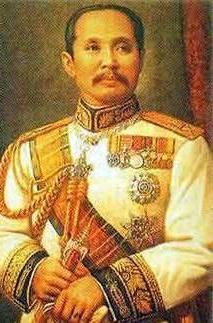
King Rama 5. พระบาทสมเด็จพระจุลจอมเกล้าเจ้าอยู่หัว (1868 ~1910)
- King Chulalongkorn the Great, Rama V, reigning title, Phra Chula Chomklao Chaoyuhua, พระบาทสมเด็จพระจุลจอมเกล้าเจ้าอยู่หัว, was the fifth King of the Chakri dynasty. This King was the employment of western advisers to modernise Siam's administration and commerce. The Railway network was also developed. Reigning for four decades, King Rama V, longest second reign of any Thai King ends the custom of prostration in royal presence, abolishes slavery and replaces labour with direct taxation. Schools, infrastructures, military and the government is modernised.
King Rama 6. พระบาทสมเด็จพระมงกุฎเกล้าเจ้าอยู่หัว (1910 ~ 1925)
- King Vajiravudh, Rama VI, reigning title, Phra Mongkut Klao Chaoyuhua, พระบาทสมเด็จพระมงกุฎเกล้าเจ้าอยู่หัว, was the sixth King of the Chakri dynasty. Rama VI studied history and law at the Christ Church, Oxford in England.
King Rama 7. พระบาทสมเด็จพระปกเกล้าเจ้าอยู่หัว (1925 ~ 1935)
- King Prajadhipok, Rama VII, reigning title, Phra Pokklao Chaoyuhua, พระปกเกล้าเจ้าอยู่หัว, was the seventh king of the Chakri dynasty. King Prajadhipok was the last absolute monarch and the first constitutional monarch of Siam. King Prajadhipok's reign was the shortest and probably the most controversial in the history of the Chakri Dynasty.
King Rama 8. พระบาทสมเด็จพระปรเมนทรมหาอานันทมหิดล (1935 ~ 1946)
- King Ananda Mahidol, อานันทมหิดล, Rama VIII, reigning title, Phrabat Somdet Phra Poramen Maha Ananda Mahidol Phra Atthamaramathibodin, พระบาทสมเด็จพระปรเมนทรมหาอานันทมหิดล พระอัฐมรามาธิบดินทร, was the eighth king of the Chakri dynasty.
King Rama 9. พระบาทสมเด็จพระเจ้าอยู่หัวภูมิพลอดุลยเดชขอบคุณครับ จากผม นาย อร่อย เจ้าเก่า (1946 ~ )
- King Bhumibol Adulyadej, ภูมิพลอดุลยเดช, Rama IX, reigning title, Phrabat Somdej Phra Paramindra Maha Bhumibol Adulyadej Mahitaladhibet Ramadhibodi Chakrinarubodindara Sayamindaradhiraj Boromanatbophit , พระบาทสมเด็จพระปรมินทรมหาภูมิพลอดุลยเดช มหิตลาธิเบศรามาธิบดี จักรีนฤบดินทร์ สยามินทราธิราช บรมนาถบพิตร. Having reigned since June 9th 1946, he is the world's longest serving current head of state and the longest serving monarch in Thai history.
King Rama 1. พระบาทสมเด็จพระพุทธยอดฟ้าจุฬาโลก (1782 ~ 1809)
- Beginning of the Chakri Dynasty under King Rama I, Buddha Yodfa Chulalok the Great, reigning title, Poramin Mahachakri Boromanat, Phra Buddha Yotfa Chulaloke, พระบาทสมเด็จพระพุทธยอดฟ้าจุฬาโลกมหาราช, the Dynasty which rules to this present day. The country is known as Siam. The New capital of Bangkok, 'Krung Thep Maha Nakhon' in Thai กรุงเทพมหานคร, was founded. Rama I revives Thai art, religion and culture.
King Rama 2. พระบาทสมเด็จพระพุทธเลิศหล้านภาลัย (1809 ~ 1824)
-King Phuttaloetla Nabhalai, King Rama II, reigning title, Buddha Loetla Nabhalai, พระบาทสมเด็จพระพุทธเลิศหล้านภาลัย, was the second King of the Chakri dynasty. King Rama II is best known for construction of Wat Arun, วัดอรุณ, also known as Temple of the Dawn, and many other temples and monasteries. Rama II reopens relations with the west, suspended since the time of King Narai.
King Rama 3. พระบาทสมเด็จพระนั่งเกล้าเจ้าอยู่หัว (1824 ~ 1851)
- The last traditional monarch and the third of the Chakri dynasty of Siam. King Jessadabodindra or King Nangklao, Rama III, reigning title, Prabath Somdej Pra Paramadhiwarasetha Maha Jessadabodindra Siammintarawirodom Borommadhammikkarajadhirat Boromanathbopitra Phra Nangklao Chaoyuhua, พระบาทสมเด็จพระปรมาธิวรเสรฐ มหาเจษฎาบดินทร์ สยามินทรวิโรดม บรมธรรมิกมหาราชาธิราช บรมนารถบพิตร พระนั่งเกล้าเจ้าอยู่หัว, was the third King of the Chakri dynasty. Rama III left his trademark as the technique of embedding Chinese porcelain fragments as decorations on temples.
King Rama 4. พระบาทสมเด็จพระจอมเกล้าเจ้าอยู่หัว (1851 ~ 1868)
- King Mongkut, Rama IV, reigning title, Chaoyuhua, พระบาทสมเด็จพระจอมเกล้าเจ้าอยู่หัว, was the fourth King of the Chakri dynasty. The role in introducing and understanding the western culture. Western science and scientific methodology brought to Siam, Mongkut is still honoured to this day in modern Thailand as the country's 'Father of Modern Science and Technology'. Rama IV, before becoming King spends 27 years as a monk and studying western science.
King Rama 5. พระบาทสมเด็จพระจุลจอมเกล้าเจ้าอยู่หัว (1868 ~1910)
- King Chulalongkorn the Great, Rama V, reigning title, Phra Chula Chomklao Chaoyuhua, พระบาทสมเด็จพระจุลจอมเกล้าเจ้าอยู่หัว, was the fifth King of the Chakri dynasty. This King was the employment of western advisers to modernise Siam's administration and commerce. The Railway network was also developed. Reigning for four decades, King Rama V, longest second reign of any Thai King ends the custom of prostration in royal presence, abolishes slavery and replaces labour with direct taxation. Schools, infrastructures, military and the government is modernised.
King Rama 6. พระบาทสมเด็จพระมงกุฎเกล้าเจ้าอยู่หัว (1910 ~ 1925)
- King Vajiravudh, Rama VI, reigning title, Phra Mongkut Klao Chaoyuhua, พระบาทสมเด็จพระมงกุฎเกล้าเจ้าอยู่หัว, was the sixth King of the Chakri dynasty. Rama VI studied history and law at the Christ Church, Oxford in England.
King Rama 7. พระบาทสมเด็จพระปกเกล้าเจ้าอยู่หัว (1925 ~ 1935)
- King Prajadhipok, Rama VII, reigning title, Phra Pokklao Chaoyuhua, พระปกเกล้าเจ้าอยู่หัว, was the seventh king of the Chakri dynasty. King Prajadhipok was the last absolute monarch and the first constitutional monarch of Siam. King Prajadhipok's reign was the shortest and probably the most controversial in the history of the Chakri Dynasty.
King Rama 8. พระบาทสมเด็จพระปรเมนทรมหาอานันทมหิดล (1935 ~ 1946)
- King Ananda Mahidol, อานันทมหิดล, Rama VIII, reigning title, Phrabat Somdet Phra Poramen Maha Ananda Mahidol Phra Atthamaramathibodin, พระบาทสมเด็จพระปรเมนทรมหาอานันทมหิดล พระอัฐมรามาธิบดินทร, was the eighth king of the Chakri dynasty.
King Rama 9. พระบาทสมเด็จพระเจ้าอยู่หัวภูมิพลอดุลยเดชขอบคุณครับ จากผม นาย อร่อย เจ้าเก่า (1946 ~ )
- King Bhumibol Adulyadej, ภูมิพลอดุลยเดช, Rama IX, reigning title, Phrabat Somdej Phra Paramindra Maha Bhumibol Adulyadej Mahitaladhibet Ramadhibodi Chakrinarubodindara Sayamindaradhiraj Boromanatbophit , พระบาทสมเด็จพระปรมินทรมหาภูมิพลอดุลยเดช มหิตลาธิเบศรามาธิบดี จักรีนฤบดินทร์ สยามินทราธิราช บรมนาถบพิตร. Having reigned since June 9th 1946, he is the world's longest serving current head of state and the longest serving monarch in Thai history.
Thailand Wallpaper -Movie Poster
Thai Dessert 3
Sticky Rice Dessert
khao niewmoon na tang tang
ข้าวเหนียวมูนหน้าต่างๆ
Indian Fried Pastry
roti
โรตี
Breadfruit in Syrup
Sakay Chuem
สาเกเชื่อม
Our dessert today was "tua dum saku biak" or Black Beans and Tapioca Balls. As in many Thai desserts, it had thick coconut milk and plenty of sugar. I am afraid I wasn't too keen on this dessert. But, at least I tried. This was only 10 baht. The next time you are walking the streets in Thailand don't be shy to try something new. Thai street food is not that expensive and is worth experimenting.
khao niewmoon na tang tang
ข้าวเหนียวมูนหน้าต่างๆ
This variety of sticky rice desserts was 40 baht from the market. It was topped with some coconut cream.
Indian Fried Pastry
roti
โรตี
This is a popular snack often seen on the street. The roti came with Indian immigrants to Thailand. Locally, we buy our roti from a Muslim family. Commonly there are two versions. This one has sweetened milk and sugar which costs about 7 baht each. Another version has an egg instead and is usually about 15 baht each.
Breadfruit in Syrup
Sakay Chuem
สาเกเชื่อม
This is another one of those Thai desserts that uses a lot of sugar. Maybe too much. You need a sweet tooth to eat something like this. This was 25 baht.
Our dessert today was "tua dum saku biak" or Black Beans and Tapioca Balls. As in many Thai desserts, it had thick coconut milk and plenty of sugar. I am afraid I wasn't too keen on this dessert. But, at least I tried. This was only 10 baht. The next time you are walking the streets in Thailand don't be shy to try something new. Thai street food is not that expensive and is worth experimenting.
Thai Dessert 2
Thai Custard with Pumpkin
fakthong sangkaya
ฟักทองสังขยา
Unripe Mango with Fish Sauce
mamuang namplawan
มะม่วงน้ำปลาหวาน
Glossy Coconut Dessert
mapraow kaew
มะพร้าวแก้ว
Candied Cassava
mansampalangcheuam
มันสำปะหลังเชื่อม
fakthong sangkaya
ฟักทองสังขยา
This Thai custard with pumpkin is very delicious but I will have to be careful not to eat too often. That is the problem with many Thai desserts as you will put on weight if you are not careful. The way they cook this is very clever. They first clean the outside of a pumkin and then cut a trapdoor in the top. The seeds inside the pumpkin are then scooped out. The Thai custard is made up of a mixture of eggs, sugar and coconut cream. You then stir this mixture together with some pandanus leaves. Once the sugar has dissolved, it is strained through cheesecloth. The pumpkin is then placed in a bowl and the mixture is poured in. The trap door is then put back and it is all then steamed for about 40 minutes. Once it is ready, the mixture should have hardened. It is now cut into wedges about three inches thick. Each wedge costs about 20 baht. Make sure you try this the next time you are in Thailand.
Unripe Mango with Fish Sauce
mamuang namplawan
มะม่วงน้ำปลาหวาน
A famous dessert that foreigners like is mango with sticky rice. This one is unripe mango with fish sauce! Not quite the same but still good. At school, the students like eating unripe mango with a dip that consists of sugar and ground chili. This one is sweetened fish sauce. In a large pot, sugar is mixed with water and fish sauce and is stirred constantly until it becomes a thick syrup. Chopped shallots are then added. When these are cooked, dried shrimp and sliced chillies are added. This snack is 30 baht.
Glossy Coconut Dessert
mapraow kaew
มะพร้าวแก้ว
The dessert today is "maprao kaew" which is basically sweet dried coconut. I don't like dried coconut that much and as usual this was a bit too sweet. The cost was 30 baht.
Candied Cassava
mansampalangcheuam
มันสำปะหลังเชื่อม
This dessert is made from the roots of a cassava plant. First you have to prepare the syrup by mixing together sugar and water and boil slowly until all the sugar has dissolved. Strain this through a sieve and then bring it back to the boil once more. Reduce the heat and then add the cassava roots which have been peeled and cut into two inch sticks. Once it is cooked through it will have a glazed look as most of the syrup would have been absorbed by the roots. You top this with a mixture of coconut cream and salt that has been boiled together and then allowed to cool. I have never had this before as it never looked that attractive. It also looked very sweet. But small amounts was very tasty. Try some yourself. This dish cost only 20 baht.
Thai Dessert 1
Sticky Ricky with Ripe Mango
khao nieow ma-muang
ข้าวเหนียวมะม่วง
Rice Flour Strings in Coconut Cream
pla gim kai tao
ปลากิมไข่เต่า
Pumpkin in Coconut Milk
faktong gaeng buat
ฟักทองแกงบวด
khao nieow ma-muang
ข้าวเหนียวมะม่วง
This Thai dessert is a favourite for most foreign visitors. It can be quite sweet at times, so don't pour too much coconut cream on the sticky rice. Of all the Thai desserts, you must try this one at least once. But a word of warning, it is very addictive and will expand your waistline.
Mung Beans in Sugar Syrup
tua-kieow tom nam-taan
ถั่วเขียวต้มน้ำตาล
tua-kieow tom nam-taan
ถั่วเขียวต้มน้ำตาล
I am not really that keen on any beans - in particular mung beans. But, I guess you can make anything delicious if you add a sugar syrup to it! A few spoonfuls was enough for me. If you want to cook yourself, just soak the mung beans in water overnight and then cook on a medium heat until tender. Then just add lots of sugar! This was only 8 baht.
pla gim kai tao
ปลากิมไข่เต่า
This dessert is sweet as usual but comes with a twist. It is called "khanom pla grim kai tao". As you can see, it has two halves - one is sweet and the other salty. The "strings" are made with rice flour and sticky rice flour. The salty half is made with thick coconut milk and salt and the sweet half with thin coconut milk and palm sugar. Not too bad and costs only 10 baht.
faktong gaeng buat
ฟักทองแกงบวด
This is another good Thai dessert that uses pumpkin as the main ingredient. To make, you need to mix sugar, salt and coconut milk together and cook over a medium heat until the sugar has all dissolved. Then add the sliced pumpkins and cook until done. When nearly done, pour in some coconut cream. This can be served either hot or cold though I prefer if it is chilled. This is only 10 baht.
Subscribe to:
Posts (Atom)